
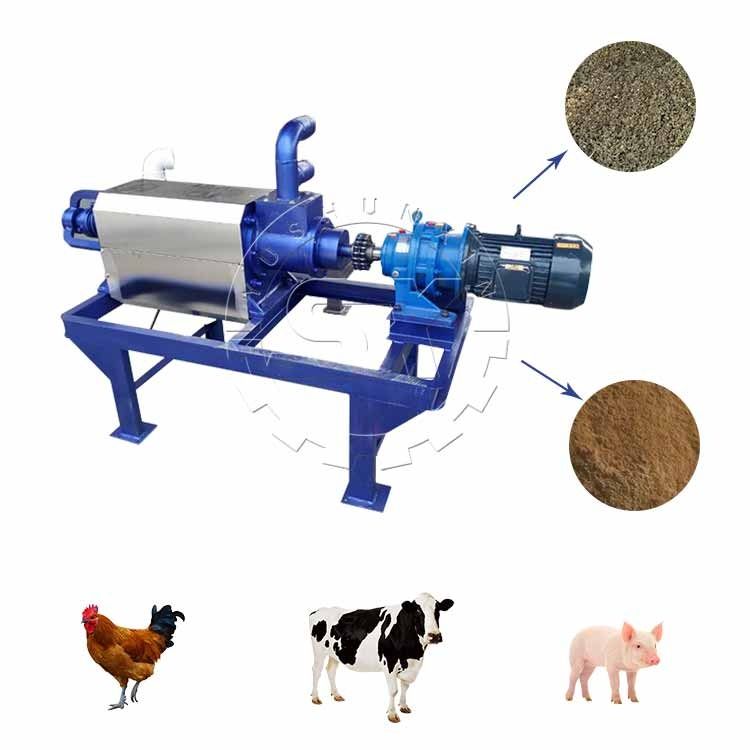
Manure Treatment Equipment
Manure treatment equipment that makes raw animal slurry handleable: solid liquid separators, dewatering machines, drye…
Read more →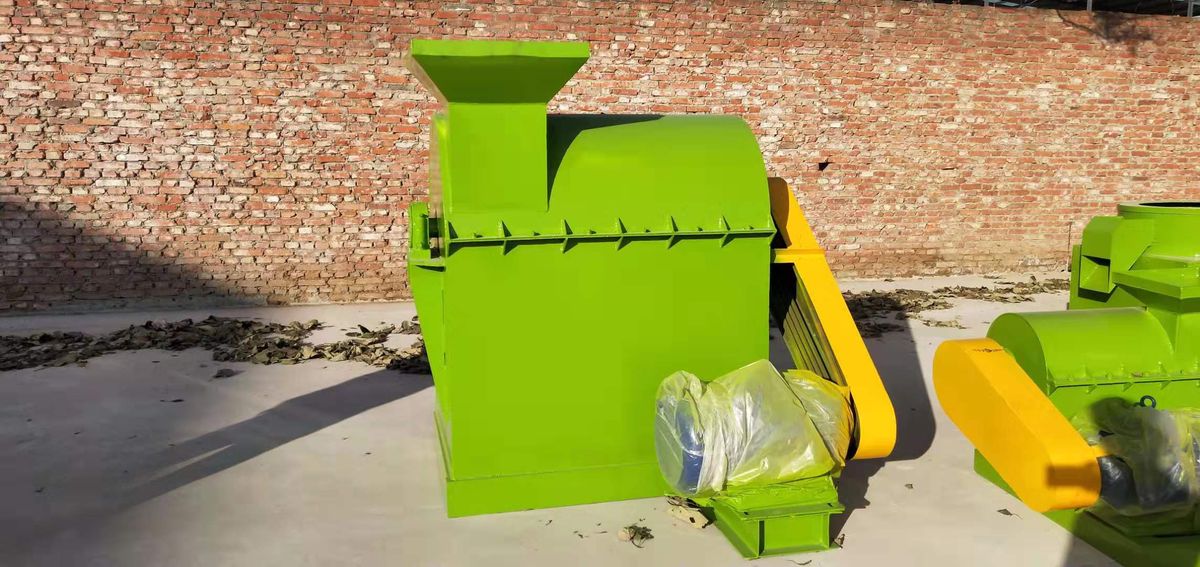
No granulator can make a round pellet from material coarser than 3 mm. Crushing looks like a minor step and is in fact the single biggest factor in granulation rate and pellet appearance.
Granulation works by rolling or pressing many small particles into one larger one. If the feed contains lumps, half-composted straw or dry crusts, the granulator produces irregular shapes, the granulation rate collapses and a large share of the output returns to the crusher. Producers who complain that their granulator does not work are frequently running a machine that is doing exactly what it can with material that has not been prepared.
Compost leaving a fermentation pile is not uniform. There is a dry crust on the surface, sticky material in the core, and lumps where the pile was not turned through. A crusher both reduces particle size and homogenises the material, and that homogenisation is what makes the moisture addition at the granulator predictable.
Because moisture is the second constraint, crushers for manure are designed to work on material at 20–30% moisture rather than bone dry. The semi-wet crusher uses a combination of rotating blades and chains, which shatter caked compost without the screen blinding that a conventional hammer mill suffers on damp material. For very wet or very sticky compost, the chain crusher is the more tolerant choice; for dry compost and chemical ingredients, a vertical cage mill or hammer mill gives a finer, more uniform product.
| Machine | Working principle | Input moisture | Output size | Best for |
|---|---|---|---|---|
| Semi-wet material crusher | High-speed blades plus chains in a vertical chamber | Up to 30% | 1–3 mm | Fermented manure compost for granulation lines — the most common choice |
| Vertical cage mill crusher | Two counter-rotating cages of bars | Up to 20% | 0.5–3 mm | Dry compost and mineral ingredients; high throughput, low dust |
| Chain crusher | Rotating chains on a horizontal shaft | Up to 35% | 2–5 mm | Sticky or very wet compost; tolerant of lumps and foreign objects |
| Hammer mill | Free-swinging hammers against a screen | Below 15% | 0.5–3 mm | Dry material and large-scale production; the highest reduction ratio |
| Straw and stalk crusher | Rotating blades in a horizontal chamber | Any | 10–30 mm | Bulking agents — straw, maize stalk, rice hull — before they are blended into manure |
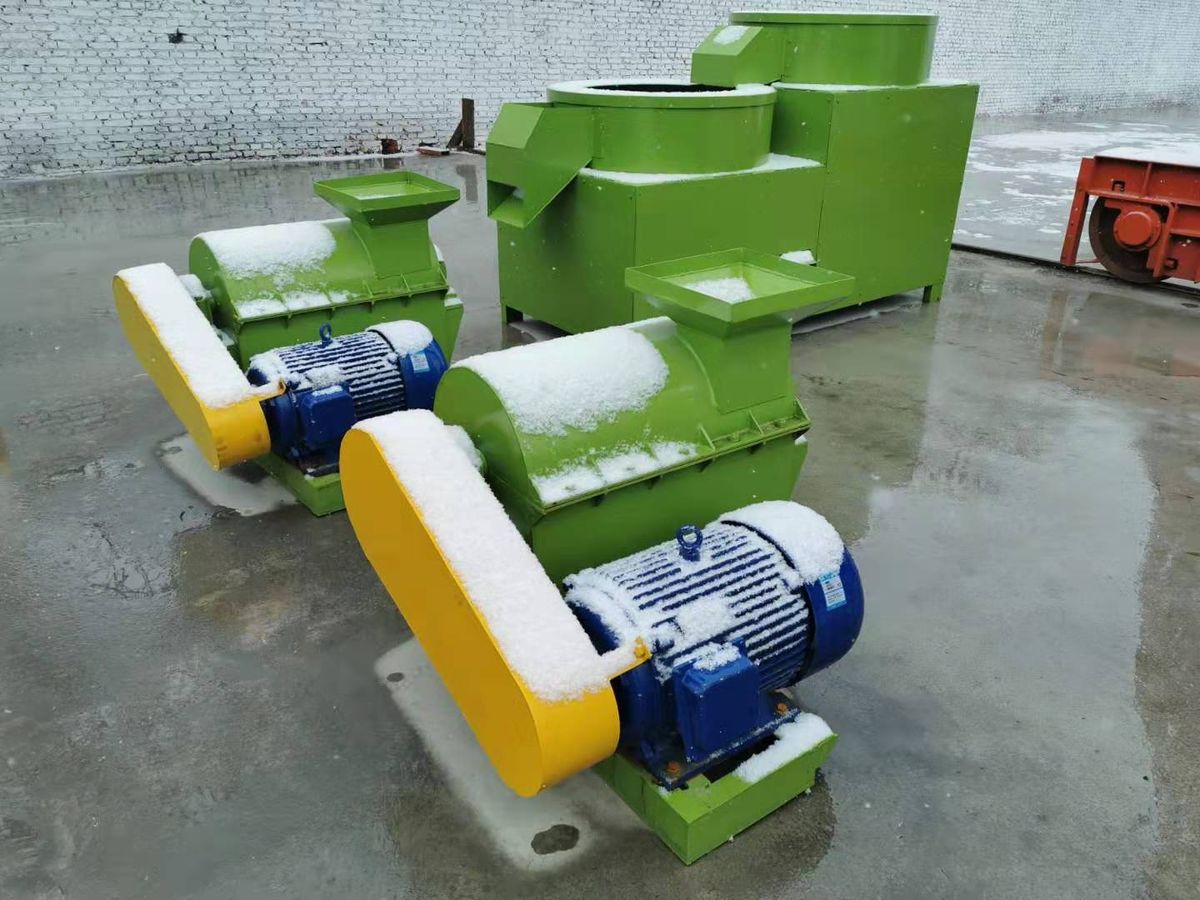
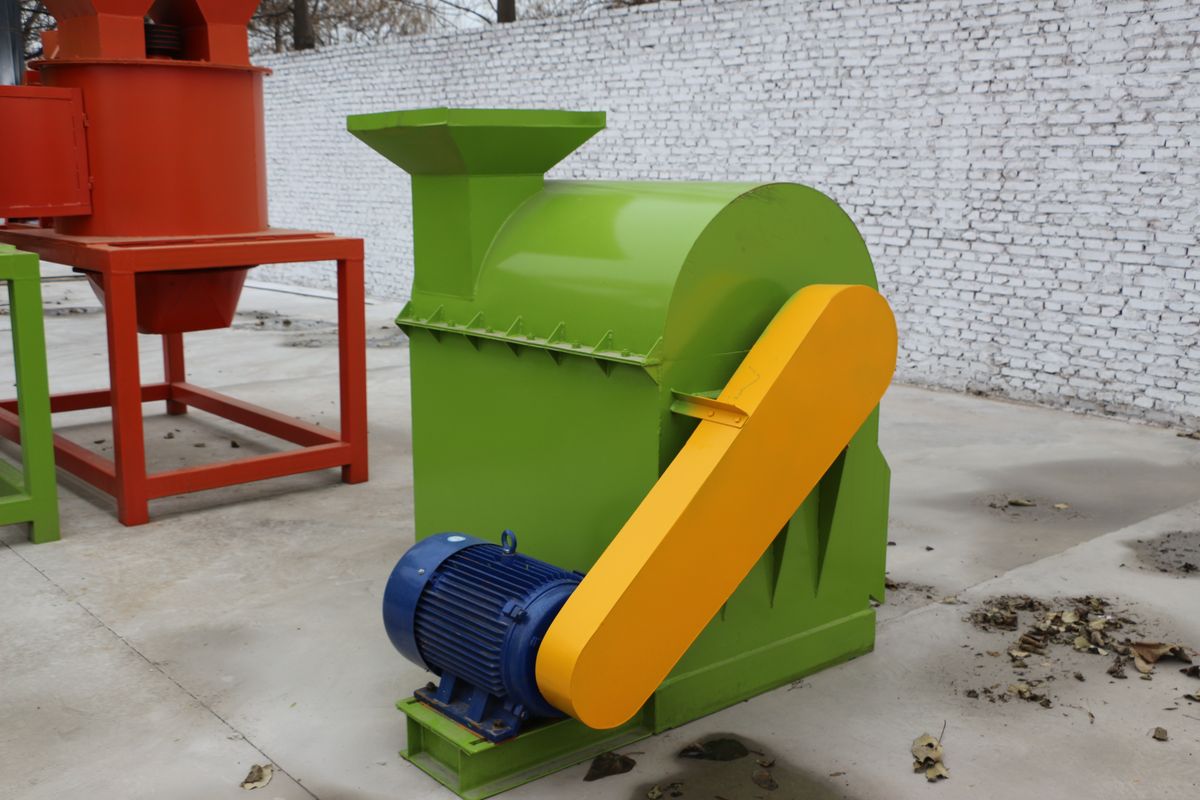
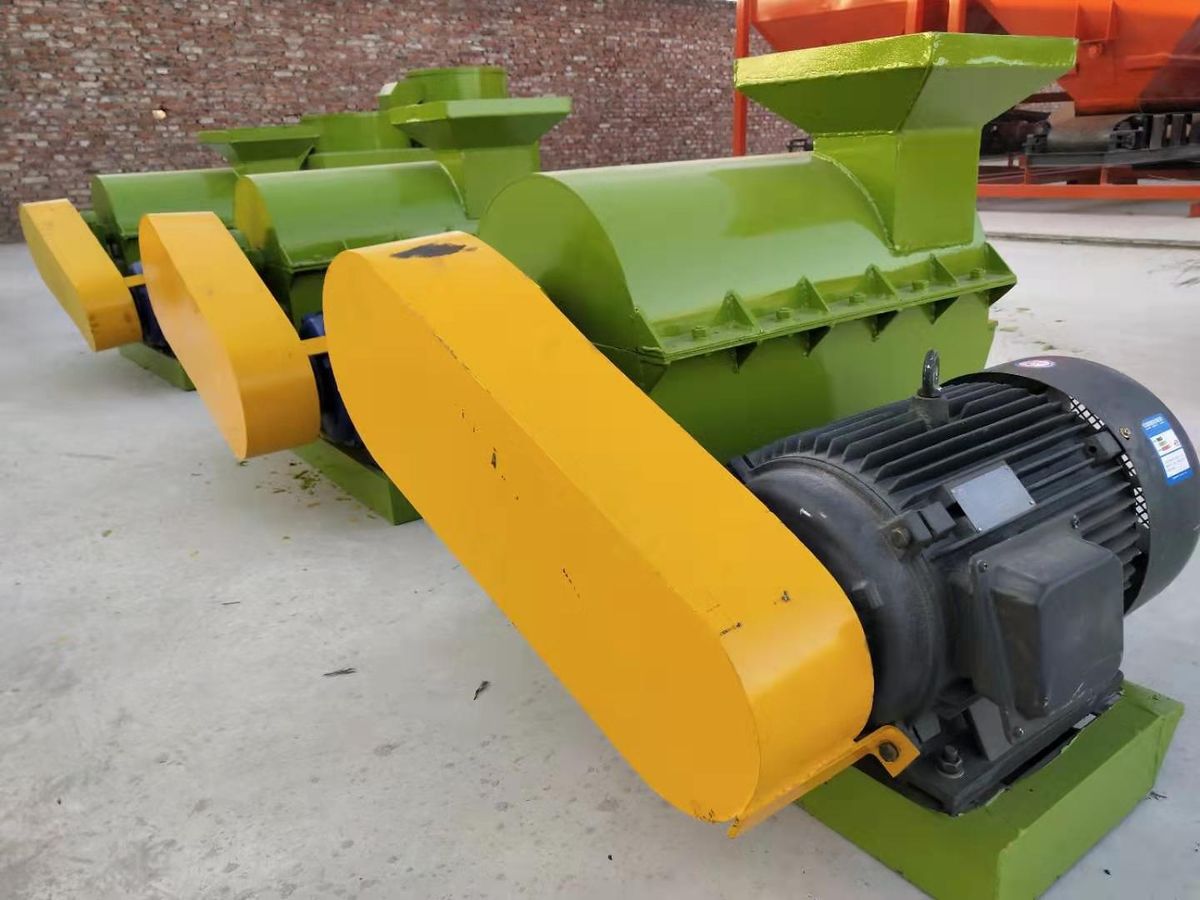
Shunxin compost shredder machine is featured with high efficiency, wide applicability, compact structure and long service life. You can use it before composting, so as to shorten composting period by crushing organic waste into small pieces. Or you can use it in compost fertilizer/organic fertilizer pellets/bio-organic fertilizer production, which can improve fertilizer quality. Its wide application is reflected in that it is suitable for dealing with agricultural wastes, animal manure, garden waste, food waste and so on.
In terms of dealing with organic waste, Shunxin new type vertical crusher, semi-wet material crusher, hammer crusher and straw crusher will be your prior choices. Even though they have different features, all of them can help you to get ideal materials.
As the patent compost shredder machine in Shunxin, new type vertical crusher utilizes blades and chains on the rotary shaft to pulverize organic waste. These crushing devices adopt special materials, which can increase crushing strength and prolong service life. Materials enter compost shredder from the feed hopper. Then, the high-speed spinning blades and chains will crush materials into uniform small pieces. The size of output materials is adjustable. In addition, there is an inspection window, by which you can maintain and replace quick-wear parts. It is available for dealing with livestock manure, poultry manure, food waste, biogas waste, peat moss and so on. What’s more, you can use it in both compost fertilizer and organic fertilizer pellets production line.
If you are interested in this machine, Please contact us!
| Model | Power (kW) | Production Capacity (t/h) | The size of feed hopper (mm) | Overall dimension (mm) |
|---|---|---|---|---|
| SEECFLF-600 | 22 | 3-5 | 400*400 | 1300*750*1900 |
| SEECFLF-800 | 30 | 5-8 | 600*400 | 1800*1020*2100 |
| SEECFLF-1000 | 37 | 8-15 | 650*450 | 1800*1200*2500 |
In organic fertilizer production line, semi-wet material crusher can convert composted organic waste into uniform particles. On the one hand, you can use crushed compost to make commercial compost fertilizer. On the other hand, you can produce granular organic fertilizer from crushed compost. Furthermore, you can adopt it to deal with organic waste before composting, so as to make small pieces and accelerate composting period. It can deal with green waste, food waste, animal manure, garden waste and so on.
Shunxin hammer crusher is suitable for large scale organic fertilizer production. Its crushing devices include hammer, baffle and screen. During working process, the hammer in high speed rotation will make materials into small pieces by intense impact. And particles with qualified size will go through the screen. Those larger particles will stay on the screen for continuous process, until they achieve qualified size and go through mesh. It will be your prior choice for large fertilizer output.
Unlike the former three compost grinding machine, straw crusher is specially used for grinding crop straw, small tree branches, grass and leaves into small pieces. As C-rich material, straw is necessary in composting process, which can adjust C/N ratio. Large pieces will increase space among materials, and slow down the heat up of compost pile. On the contrary, the crushed straw is easy to be decomposed and can adjust water content of compost pile. You can use it in your farm to deal with agricultural waste, or to deal with green waste. In addition, the crusher knife is made up of 16Mn steel, which has higher strength and corrosion resistance.
You can use organic waste shredding machine during composting process, or use it in compost fertilizer production and granular fertilizer production. In addition to crush organic waste, it also can be used for secondary recycle of unqualified fertilizer pellets in organic fertilizer pellets production line. After crushing, unqualified pellets will become powder and be made into pellets again. That is to say, you can achieve the 100% utilization of materials by compost shredder machine.
It is an important manure to fertilizer equipment to deal with poultry manure (useful chicken manure management machinery ), livestock manure (horse manure, pig manure and cow dung fertilizer equipment), agricultural waste (crop straw) and green waste.
Meanwhile, it is suitable for both small scale waste management and large-scale organic waste management.
What’s the difference between new type vertical crusher and semi-wet material crusher?
The crushing device of the former one includes blades and chains, but that of the latter just consists of blades. They are same in crushing effect, but the production capacity of former one is larger.
What’s the difference between SEECSF-40II and SEECSF-40?
SEECSF-40II has two crushing stage, which can produce finer powder. But the SEECSF-40 just has one stage. You can choose suitable one, according to your actual requirements.
What type of engine does Shunxin compost shredder machine adopt?
The motor we use is Normal Chinese Brand. But if you have special requirements (you need other brand, such as Siemens and etc.), we can change it for you with some extra cost. In addition, the crusher adopts electric motor.
None of the machines (SEECSF-40II and SEECSF-40) will be blocked during dealing with wet materials?
Yes. Generally speaking, our customer adopts semi-wet material crusher to deal with fermented materials. If you want to raw materials directly, the moisture should be controlled among 20%-40%. And the final size of crushed material can achieve 5-8mm. If you want to deal with agricultural waste, we recommend straw crusher, it can achieve much smaller size. But the moisture of materials should be within 15%.
Photographed in our Xingyang workshop and on customer sites. Watermark-free, no phone numbers.
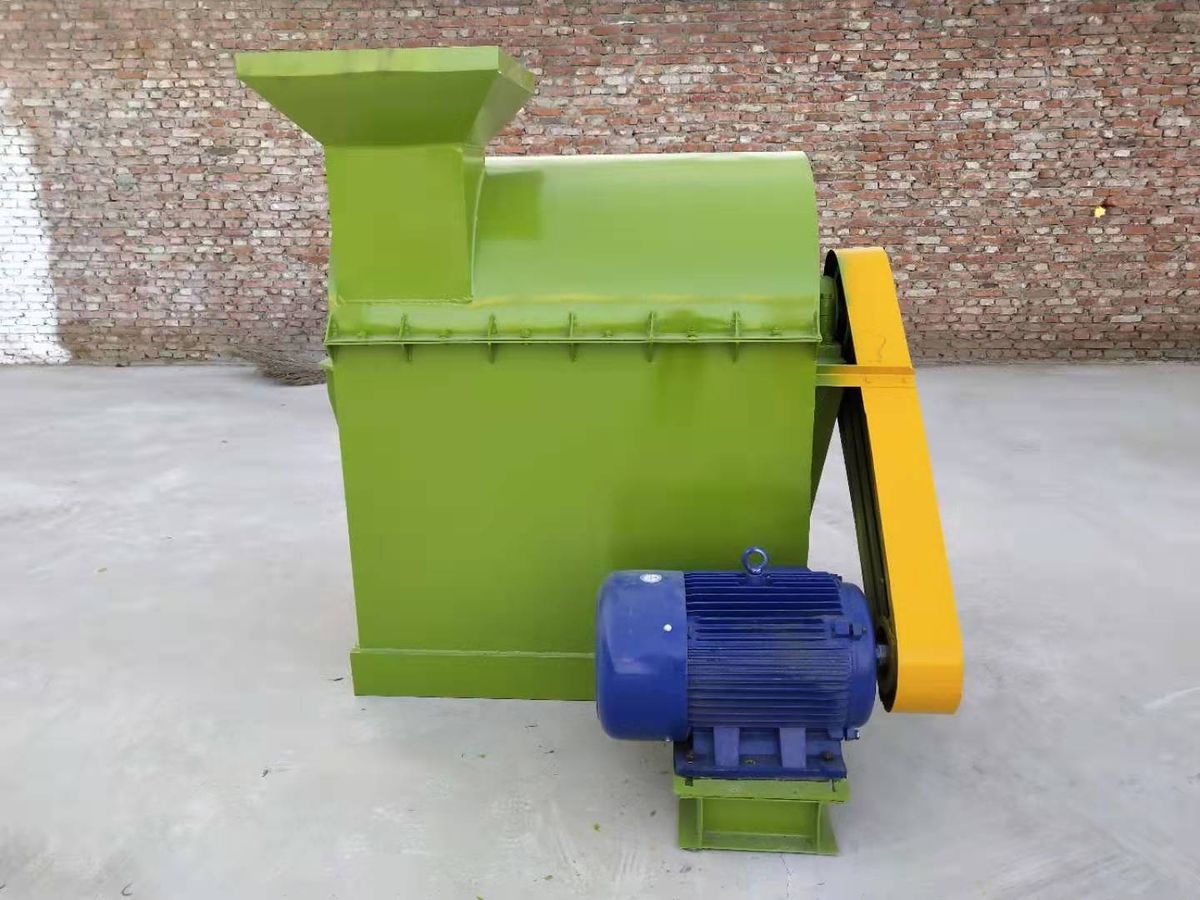
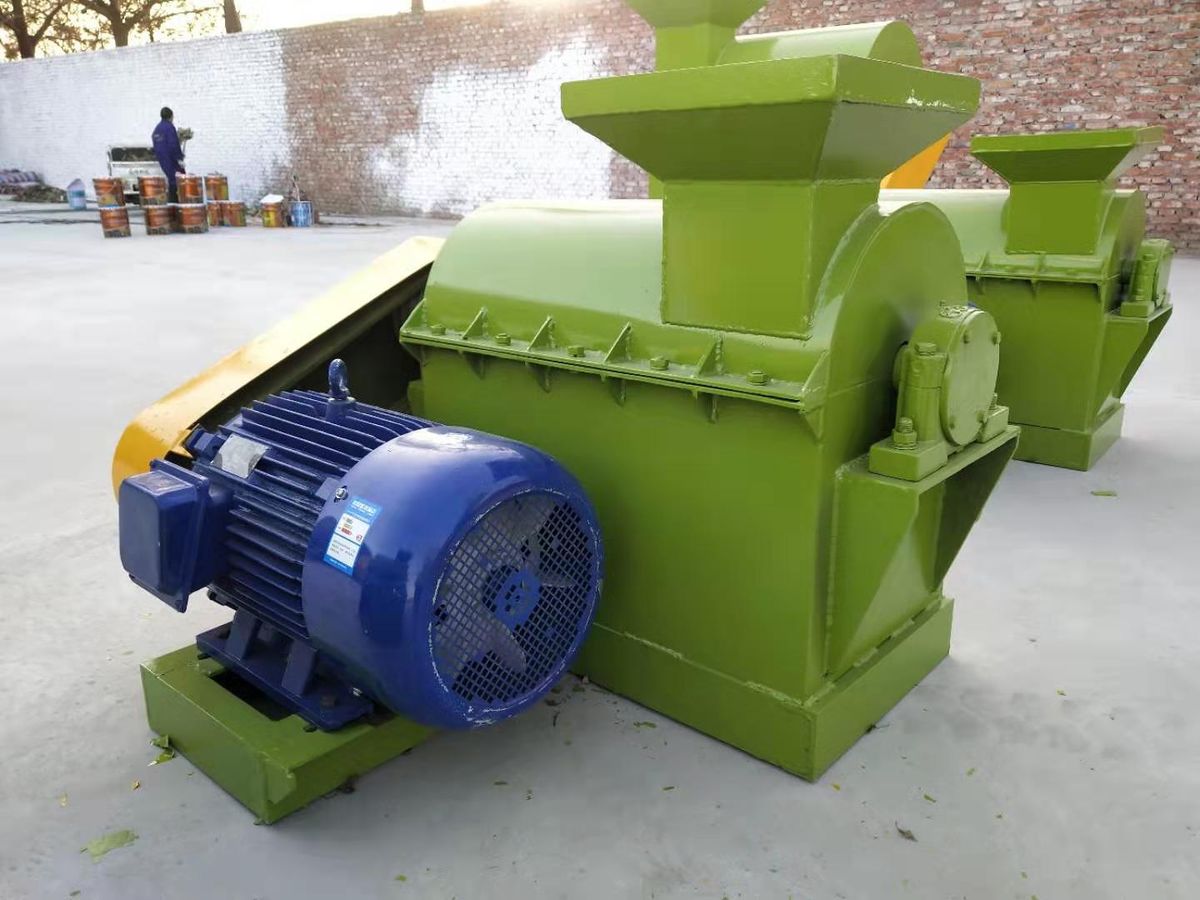
Every particle should pass about 3 mm, and the more of it below 1 mm the better the granulation rate and the rounder the pellet. Above 3 mm the granulator cannot close the surface of the pellet, which produces irregular shapes, low hardness and a high proportion of material returning to the screen.
The semi-wet material crusher is the standard choice for fermented manure at up to about 30% moisture because it combines blades and chains, giving fine output without blinding. The chain crusher is more tolerant and better suited to very sticky or wetter material at the cost of a coarser product. Where the compost is dry, a vertical cage mill or hammer mill produces a finer and more uniform powder.
It is possible but not advisable in the main crusher. Straw is tough and fibrous, and crushing it inside the compost stream at 25–30% moisture consumes a large share of the machine's capacity. A dedicated straw or stalk crusher produces a 10–30 mm bulking agent that is far better for opening the compost pile, and it is also cheaper to run.
It depends on the amount of sand and grit in the manure. In clean conditions blades are typically serviced every two to three months and replaced after a year; where sand is present, considerably more often. This is one of the reasons a sand trap ahead of the separator pays for itself — the same sand damages the separator screen, the auger, the crusher and the granulator teeth.
Manure treatment equipment that makes raw animal slurry handleable: solid liquid separators, dewatering machines, drye…
Read more →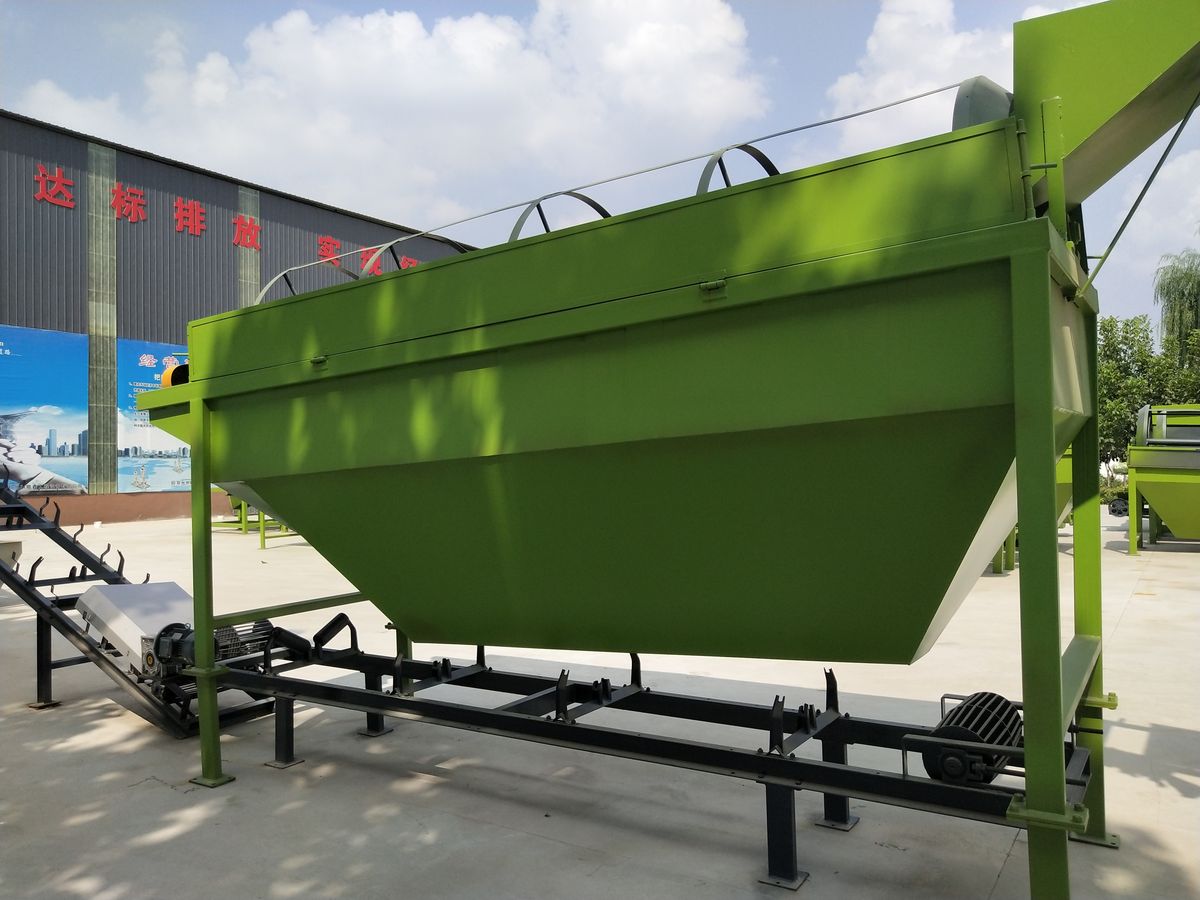
Compost screening equipment that grades manure compost into powder fertilizer and separates oversize, stones and plast…
Read more →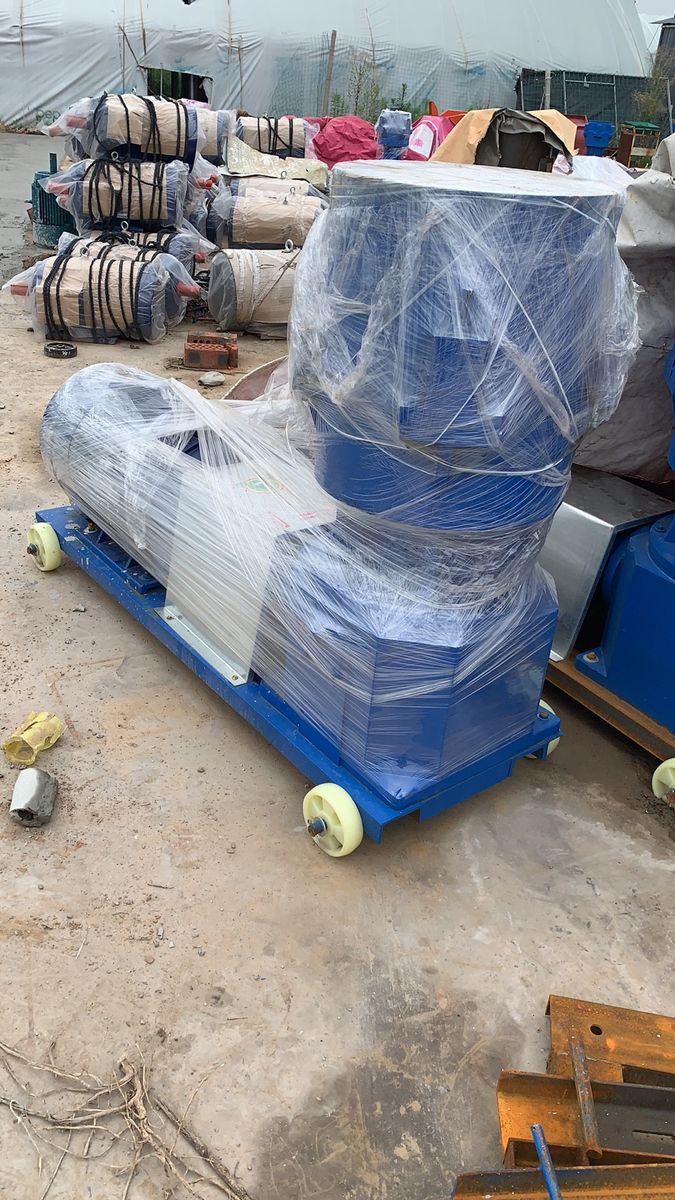
Manure fertilizer machines that turn compost into a product: granulators, pellet machines, powder lines, coaters, cool…
Read more →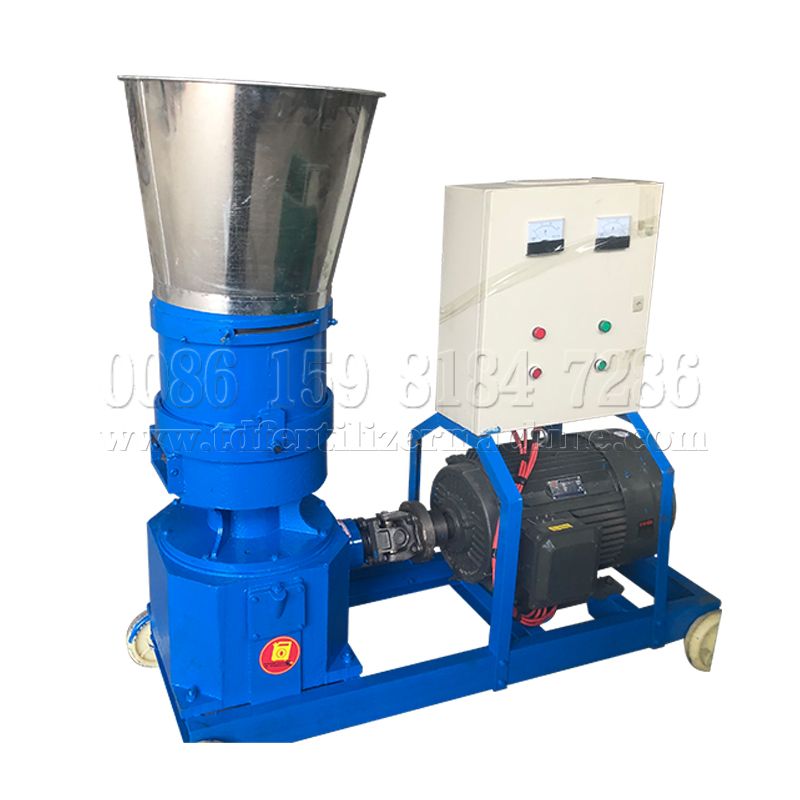
Manure pellet machines that turn fermented compost into uniform organic fertilizer pellets: disc, drum, stirring-tooth…
Read more →Send your raw material, target capacity and country. Our engineers reply within one working day with a process route, equipment list and budget.
Send us your raw material and target capacity — we will propose the process, the machines and the budget.
Send your raw material and target capacity — our engineers reply within one working day with a process route, equipment list and budget.
Our engineering team will reply within one working day. For anything urgent, message us on WhatsApp.
Open WhatsApp