
Manure Fertilizer Machines
Manure fertilizer machines that turn compost into a product: granulators, pellet machines, powder lines, coaters, cool…
Read more →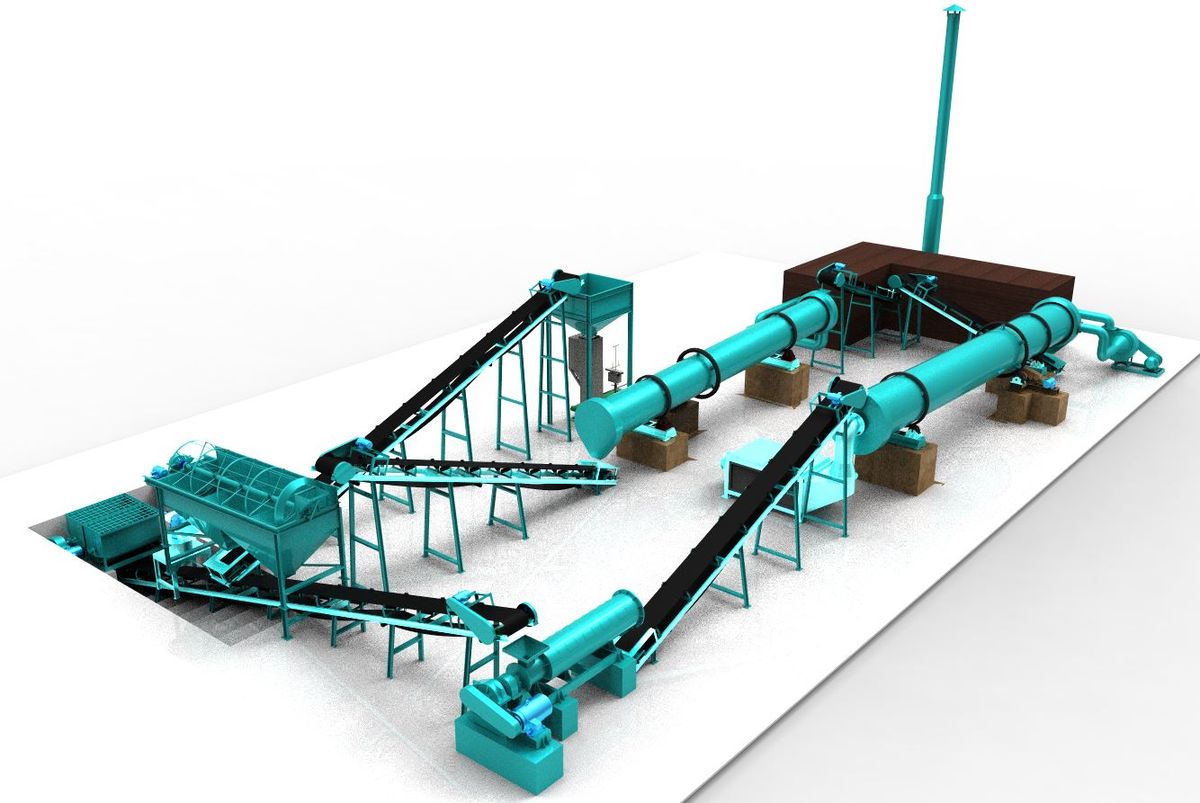
Mature compost is only halfway to a saleable product. These are the machines that turn it into a bagged organic fertilizer with a consistent mesh, a declared analysis and a fixed bag weight.
Ask a distributor why they rejected a load of organic fertilizer and the answer is usually about appearance and consistency, not agronomy. The bag was lumpy. The colour varied between bags. Half of it was dust and half of it was clods. That is a crushing and screening problem, and it is the most cost-effective thing to fix in any compost fertilizer plant.
Crushing reduces the compost to a uniform particle size — every particle below 3 mm for a granule line, and around 20–60 mesh for a powder product. Screening then removes anything that should not be in the bag: stones, glass, plastic, wire and the oversize fractions that have not broken down. Together they convert a variable farm material into a manufactured product, and they cost a fraction of what a granulation line costs.
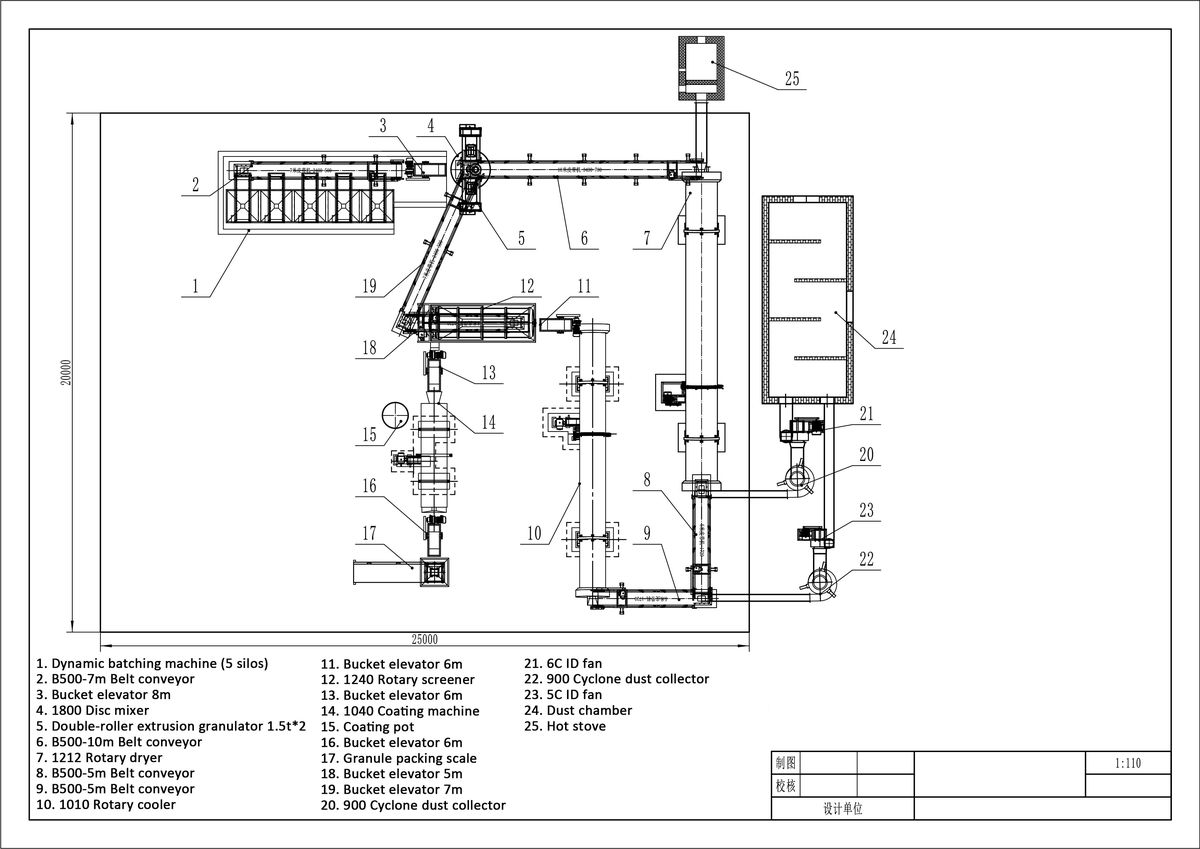
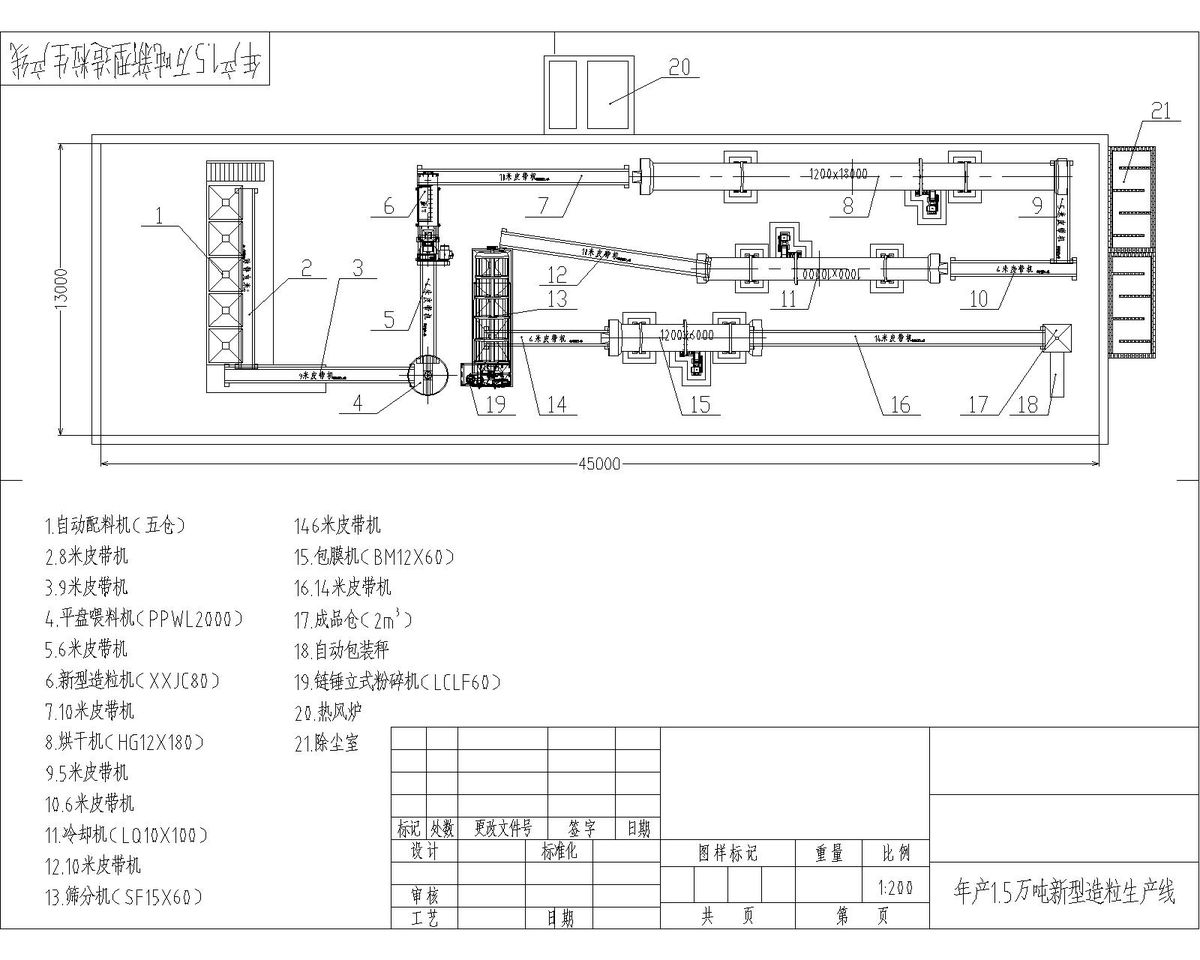
Everything downstream of those two machines is about adding value or extending shelf life. A mixer lets you declare a formula. A granulator, dryer, cooler and coater turn the powder into a pellet that spreads evenly and stores for months. A bagging machine gives every sack the same weight so that your yield figures and your customer's expectations both hold.
Confirm the compost no longer re-heats, is dark and crumbly, and smells earthy. Immature compost produces soft pellets and can continue to decompose in the bag.
Bring moisture to about 25–30% by air drying on the pad or by blending finished dry product back into the feed. On a powder line this is often the only drying the plant needs.
Semi-wet or chain crusher below 3 mm, which also homogenises the material and eliminates caking.
Rotary drum screen with anti-blinding balls; oversize returns to the crusher, undersize passes forward.
Humic acid, trace elements, mineral nutrients, binder and anti-caking agent blended in a horizontal mixer or metered by an automatic batching system.
For pellets: granulate at 25–35%, dry to 12–14%, cool below 40 °C, coat, and grade with a product screener.
Weigh and seal into 25 kg, 40 kg or 50 kg bags with a declared weight and a batch number; palletise and store under cover.
| Stage | Powder line | Granule line |
|---|---|---|
| Feeding and conveying | Yes | Yes |
| Crushing | Yes | Yes |
| Screening before bagging | Yes | Yes, plus a second product screen after drying |
| Mixer and batching | Recommended | Essential |
| Granulator | No | Yes |
| Dryer and cooler | No | Yes — the largest operating cost of the line |
| Coater | No | Yes, to prevent caking |
| Bagging | Yes | Yes |
| Relative equipment cost | 1.0 | 3.0–4.5× |
| Relative operating cost per tonne | Lowest | Higher, dominated by drying fuel |
Compost fertilizer making machine is the most important factor in the process, where organic waste becomes organic fertilizer by composting and deep processing. As a compost machine manufacturer, Shunxin will recommend the following equipment to you. All of them will be good assistants in compost fertilizer production process. At the same time, you can use it as organic waste recycling machine, by which you can convert organic waste into nutrient-rich fertilizer. If you need more detailed information and price list, please send us e-mails.
According to organic composting methods (composting in fermentation grooves or windrow composting), Shunxin compost turning machines include:
Groove type compost turner: If you place organic waste in paralleled fermentation grooves, groove type compost turner can regularly turn organic materials, blend them evenly and crush caking into pieces. The main part of compost turner is turning device, which consists of rotary shaft and turning tooth. There are three kinds of turning device, mechanical (electric motor drive steel wire), hydraulic, and no lifting and descending.
Windrow compost turner: It includes self-propelled compost turner and crawler type compost turner. Both of them works on the long windrows. Their turning devices adopt quality material, so they have longer service life and strong turning capacity. They use diesel oil as power source.
All of these compost making machines just need one person to operate. And they have many models for you to choose.
New type vertical crusher, semi-wet material crusher and hammer crusher are usually used for deal with composted organic waste. The inside shredding device will make compost into small pieces with set size. New type crusher adopts high-speed rotating chains and blades, which have high efficiency. Semi-wet compost crusher can deal with organic waste and compost with higher moisture. It includes one-grade crushing and double-grade crushing, you can choose one according to your actual requirements. Hammer crusher makes compost uniform under the role of hammer and sieve plate. And the last kind of crusher is straw crusher. You can adopt it to deal with some plants wastes, such as straw, leaves and small tree branches. After crushing, you can use them as auxiliary materials for composting. If you want to select the most suitable crusher, you can contact us. And we will provide you professional advice.
After crushing, compost fertilizer will become small pieces. In order to guarantee the uniformity and purity of particles, you can use compost screening machine to select out unqualified materials. Here, we recommend rotary screen machine to you. The size of sieve pore determined the quality of compost fertilizer. According to different requirements on compost quality, the equipment has different discharge ports. Generally speaking, the discharge ports are two or three. In addition, there are rubber sheets on the screening device, which can effectively prevent adhesion of materials. Furthermore, it is featured with high efficiency, low noise, little dust flying, easy operation and maintenance. Its capacity ranges from 1 t/h to 20 t/h, which can meet different compost fertilizer production requirements.
If you want to add some other nutrient elements into compost fertilizer, you must mix them evenly to make sure uniform fertilizer effect. Shunxin horizontal mixer, double shafts horizontal mixer, single shaft mixer and disc mixer are available compost fertilizer machines in fertilizer production. All of them can mix multiple materials evenly with different working principle and mixing devices. In addition, compost fertilizer and other materials enters compost mixer from the top and blended materials will discharge at the bottom. Then, they will enter next compost making procedure by belt conveyor. Their capacity ranges from 2 t/h to 15 t/h. If you need price list and more details, please contact us.
If you want to know more details and price, please contact us!
It is the last step to process compost fertilizer. The special design inside the powder fertilizer packaging machine can effectively prevent materials blockage. Shunxin packing scale includes no-bucket bagging machine and single-bucket bagging machine. The former one adopts continuous weighing. That is to say, when the weight reaches set parameter, the discharge port will stop letting compost fertilizer out. On the contrary, the single-bucket packing machine will weigh fertilizer at set parameter, and fill up the bags at once. In the whole packing process, only one or two persons are needed. One person to place bags under discharge port, and the other one monitors the sewing of bags. Finally, Shunxin compost fertilizer packing machine is featured with compact structure, higher accuracy, easy operation and maintenance. Its weighing range is 25 to 50kg.
In addition to making powdery fertilizer from compost, you also can make compost fertilizer into granules by compost pellet machine. Compared with compost fertilizer powder, granulated organic fertilizer is more convenient for application. Shunxin compost pellet machine includes disc granulator, rotary drum granulator, new type compost fertilizer granulator and rotary drum stirring granulator. All of them have higher granulation rate and adopts wet granulation. That is to say, the moisture of compost turner should be 25% to 35%. What’s more, all of them can be equipped with water spraying system, so as to add water to compost fertilizer during granulation. Under the role of granulator, compost fertilizer will gradually become spherical pellets with proper hardness and uniform size. Therefore, they will be your best choice in compost fertilizer pellets production.
In terms of compost fertilizer manufacturing process, compost making machines are essential. If you want to make quality commercial compost fertilizer, the following works and machines is for your reference.
The role of composting equipment is to adjust fermentation conditions (temperature, moisture and oxygen content) and shorten composting period. Generally speaking, organic waste cannot be applied to soil and plants directly, even though it contains much nutrients. On the one hand, organic wastes (such as animal manure and sludge, etc.) may contains some pathogens and harmful substance. These things will have a bad effect on soil and plants. On the other hand, organic matters in organic wastes will become available and absorbable after composting. At the same time, the compost turner will evenly blend and mix organic wastes, so as to improve compost quality.
Releasing extra heat produced by microorganism activity by stirring. Whether you place organic waste in fermentation grooves or in long compost heaps, compost turner will fully stir organic materials with its stirring device and crush caking into small pieces.
Making sure compost quality. In addition, compost turner can mix outside wastes (unfermented materials) and materials in inner part (composted materials), so as to guarantee uniform fermentation.
Moisture adjustment. The stirring of compost pile with compost turner will take away extra moisture in form of water vapor. On the contrary, if the compost pile is lack of water, the water spraying system on the compost machine will add water to organic wastes.
Compost fertilizer production also means powdery organic fertilizer production. Therefore, you must pay more attention to quality of powder. In order to achieve this purpose, compost grinding and screen machines are necessary. Compost crushing machine can make caking that generated from long-time stacking into small pieces. Then, the compost screen machine will select out impurities and powder with larger size. That is to say, you can get uniform fertilizer powder after crushing and screening.
In order to improve convenience for transportation, storage and application, making bagged fertilizer is necessary. Shunxin compost fertilizer bagging machine can automatically finish feeding, filling and sewing of compost fertilizer. With one worker, you can get bagged fertilizer in a short time. In addition, if you have large amount of bagged fertilizer to manage, you can also adopt bag palletizer machine to improve efficiency and save time.
Shunxin compost fertilizer production equipment is widely applicable to various organic wastes. According to our sales status, our customers usually adopt compost fertilizer making machines to:
Make compost fertilizer from animal manure: poultry manure ( chicken manure, goose manure, pigeon dung and so on), livestock manure ( pig manure, horse manure, cow dung, goat manure and so on.)
Produce compost fertilizer from other wastes: treated sewage sludge, sugar filter cake, sugar press mud, spent mushroom compost, vegetable remains, farm waste and so on.
If you have some problems, please contact us and we can provide professional advice!
Offer factory visit and customized compost fertilizer making machine service. Shunxin have its own factory. During factory visit, you can know more about equipment manufacturing and operation. In addition, we will arrange specialized staff to give you detailed introduction. Furthermore, if you have special requirements on equipment (color, additional functions and materials, etc.), we can provide customized service.
Professional compost fertilizer production plan and advice on equipment selection. In addition to quality equipment, if you have any problems on compost fertilizer production, our engineer can offer you reasonable plan and solutions according to your actual conditions. If you do not know how to select equipment, we can provide you advice.
Installation and application instruction. After purchasing our compost production machine, we will provide you installation and operating instructions and videos. If you need special instruction and training for operation, we can designate one engineer for site instruction.
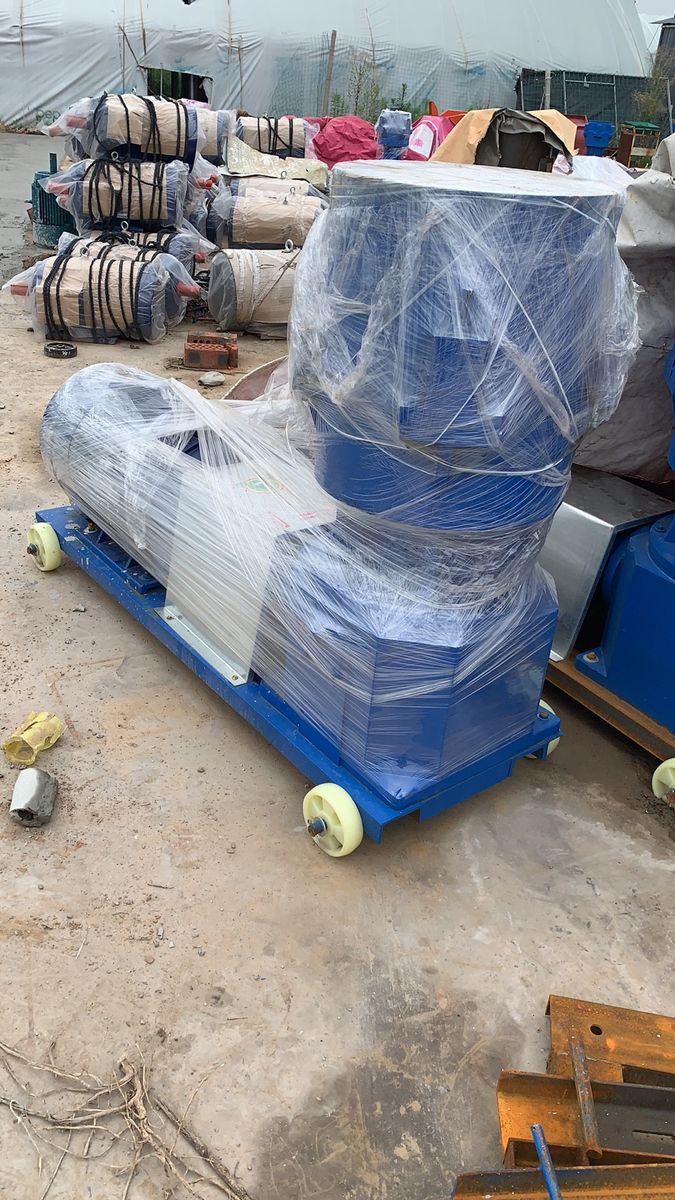
Photographed in our Xingyang workshop and on customer sites. Watermark-free, no phone numbers.
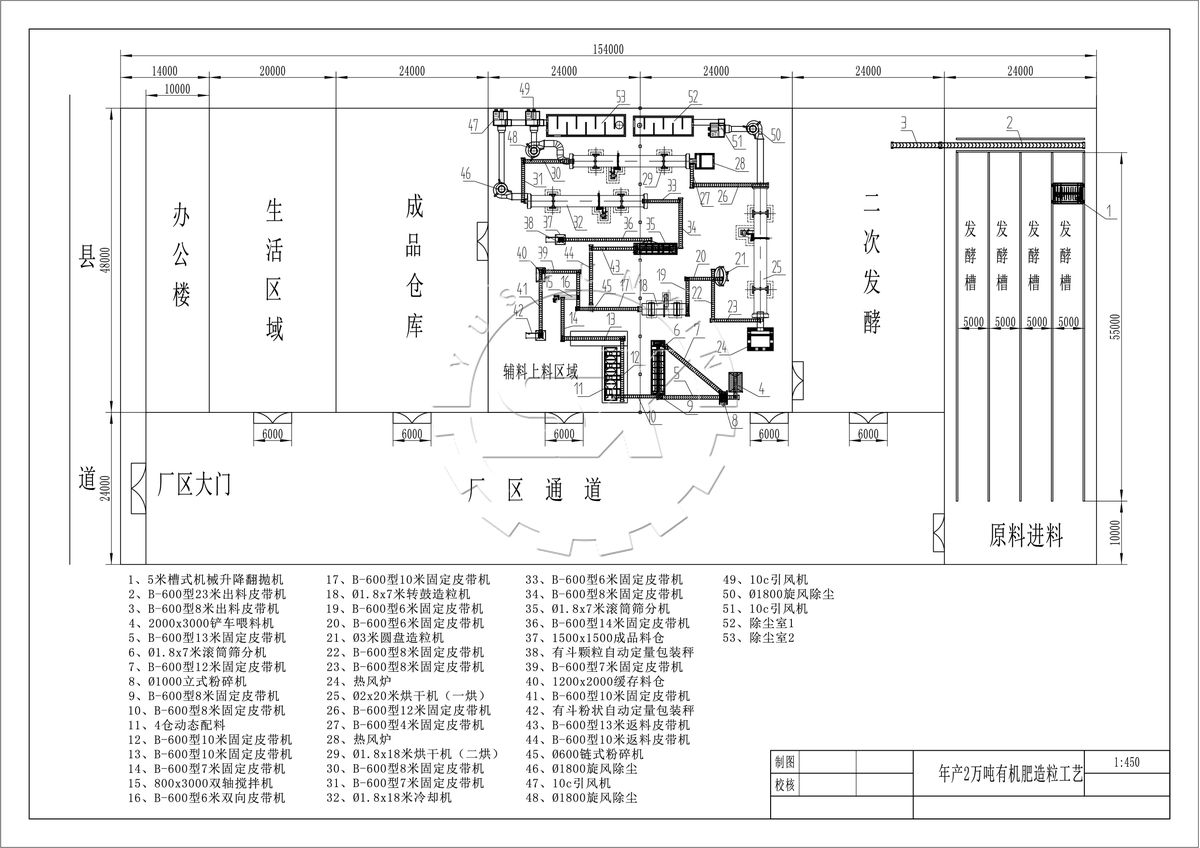
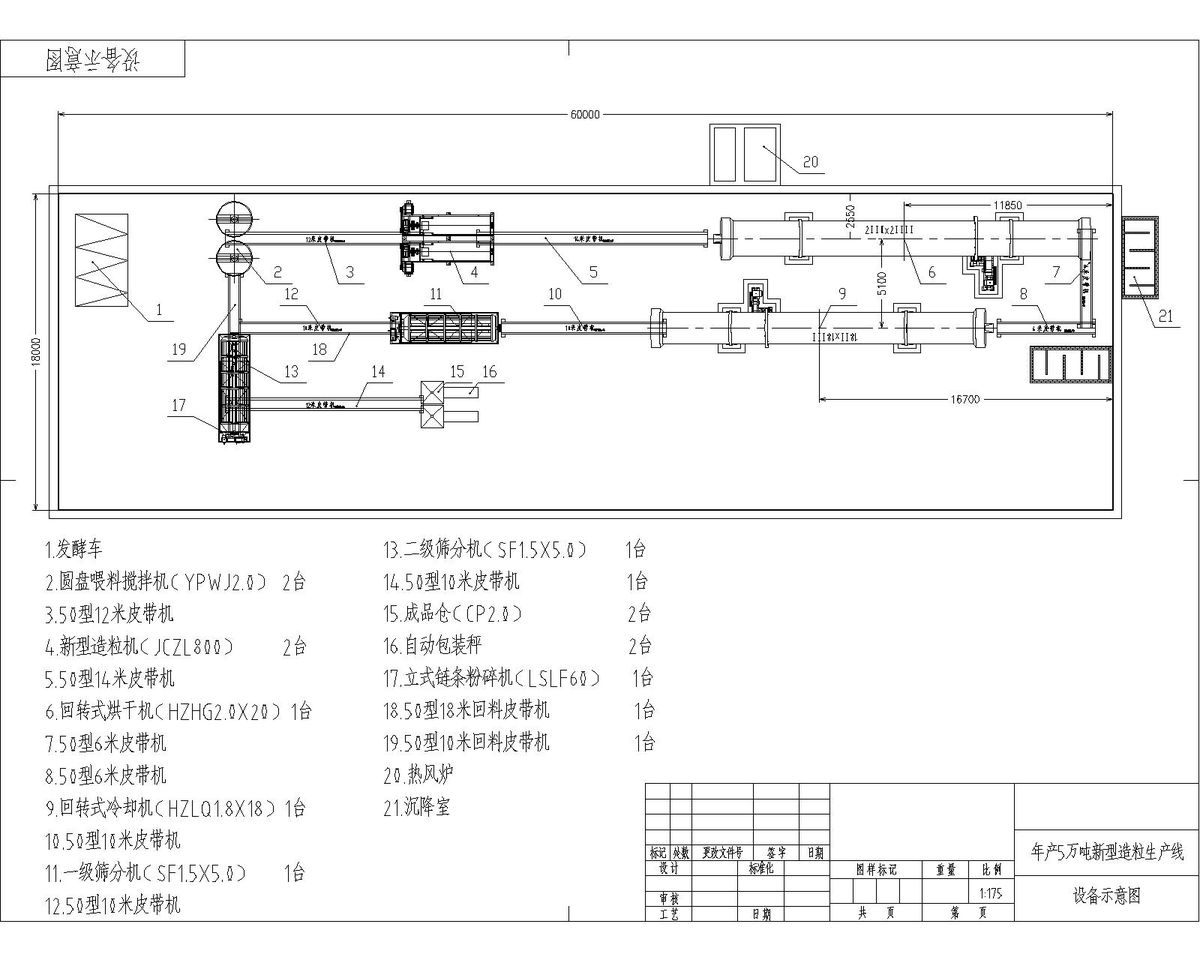
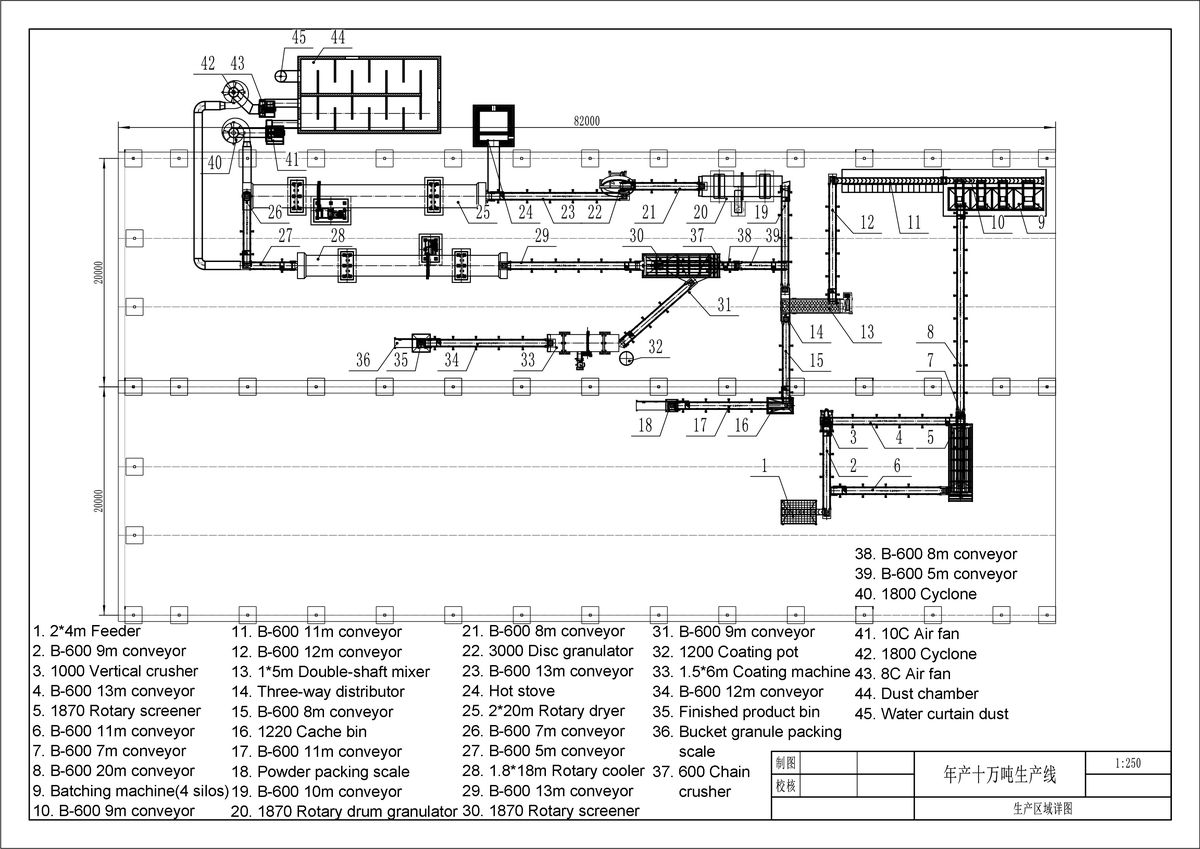
Compost is the biologically stabilised organic material that comes out of the fermentation process. Compost fertilizer is that material processed into a product: crushed to a uniform particle size, screened, blended to a declared formula, and either bagged as powder or granulated, dried and bagged as pellets. The processing is what makes it consistent enough to sell through a distributor.
Yes, and it is the recommended first step. Crushing, screening, mixing and bagging produce a complete powder organic fertilizer with no granulator, dryer, cooler or coater. The capital cost is roughly a third of a granule line and there is no drying fuel cost at all. When your market starts paying a premium for pellets, you add the granulation section to the same line.
Three measures, used together: dry the product to 12–14% moisture before bagging, cool it below 40 °C, and either coat the pellets or add an anti-caking agent at 0.5–2%. Store the finished product under cover and off a damp floor. Caking is almost always a moisture and temperature problem rather than a formulation problem.
Allow for about 10% loss in crushing, screening and dust collection, so roughly 1.1 tonnes of mature compost per tonne of powder fertilizer. On a granule line add the binder — typically 1–5% — and the water that is removed in drying, which means the feed to the granulator will be somewhat heavier than the finished tonnage.
Manure fertilizer machines that turn compost into a product: granulators, pellet machines, powder lines, coaters, cool…
Read more →Organic fertilizer making machines for every stage: feeding, batching, composting, crushing, screening, mixing, granul…
Read more →Compost pellet machines that granulate mature compost from manure and green waste into uniform organic fertilizer pell…
Read more →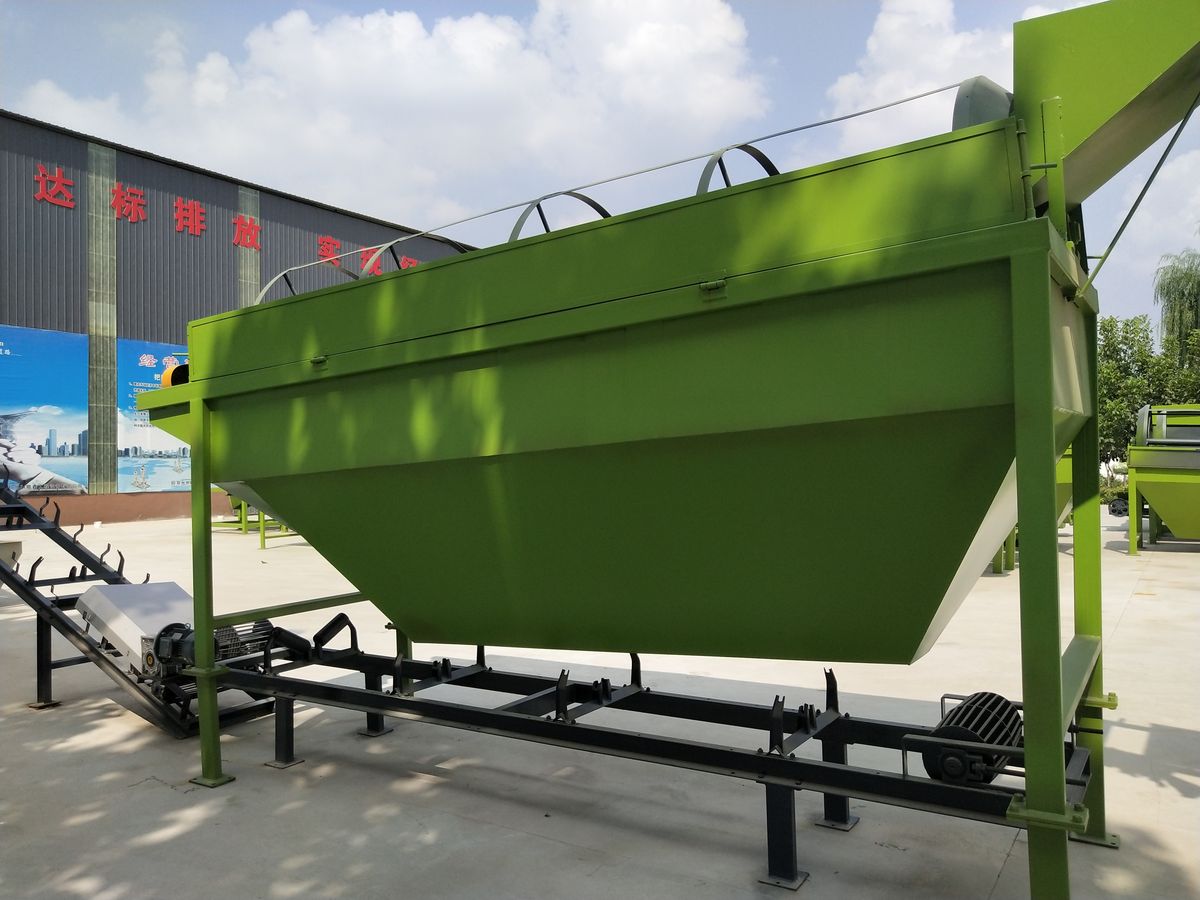
Compost screening equipment that grades manure compost into powder fertilizer and separates oversize, stones and plast…
Read more →Send your raw material, target capacity and country. Our engineers reply within one working day with a process route, equipment list and budget.
Send us your raw material and target capacity — we will propose the process, the machines and the budget.
Send your raw material and target capacity — our engineers reply within one working day with a process route, equipment list and budget.
Our engineering team will reply within one working day. For anything urgent, message us on WhatsApp.
Open WhatsApp