
How to Compost Pig Manure
How to compost pig manure: separate the slurry, blend with carbon material, build and turn the windrow, and produce ma…
Read more →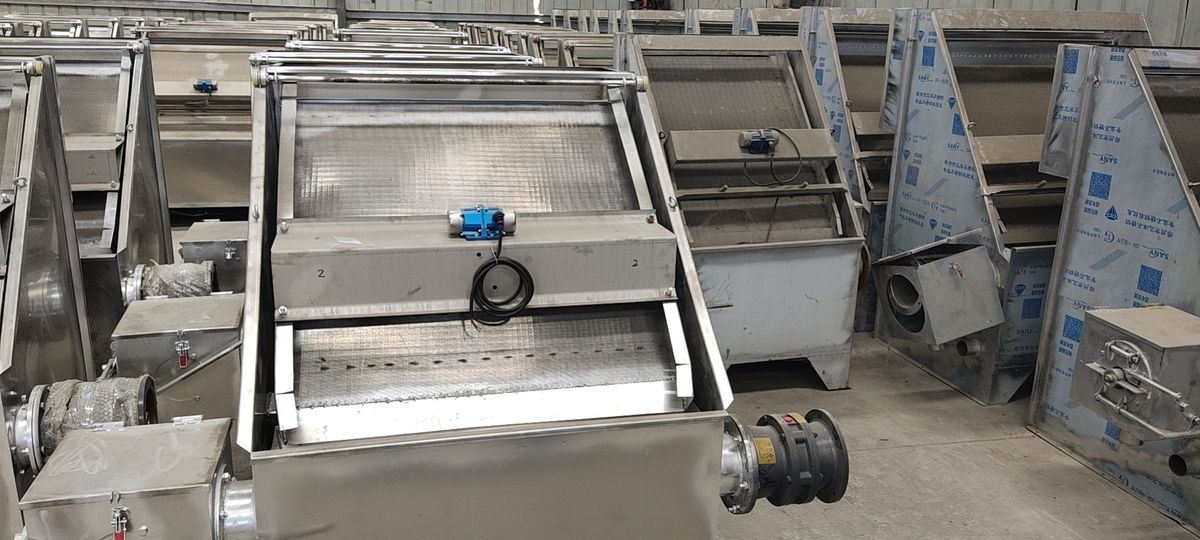
A finishing pig produces 10–20 litres of slurry a day. It cannot be stacked, it cannot be spread on the same land indefinitely, and it will create odour within hours. Pig manure management is a complete system, not a single machine.
Pig slurry combines three difficulties. It is very dilute, at 85–95% water, so the cost of moving it to a field is dominated by water. It is high in ammonium nitrogen and potassium, which makes it valuable as a fertilizer but also means it generates ammonia and nitrate leaching if it is stored or applied carelessly. And it is quickly anaerobic, so an untreated lagoon or heap produces hydrogen sulphide and the characteristic pig farm odour within hours.
The standard solution is separation, followed by separate management of the two streams. The screw-press separator removes 40–60% of the volume as liquid and discharges a solid at 60–70% moisture which can be blended with straw and composted. The liquid fraction still carries most of the potassium and much of the nitrogen; it is stored in a lined lagoon for fertigation of pasture or crops, or used as feedstock for a biogas digester, where dilute pig slurry is an excellent substrate.
The important shift in thinking is that the liquid is not waste. Treated as a nutrient solution, it displaces purchased fertilizer and reduces the farm's nitrogen balance problem. Treated as effluent, it becomes an expensive disposal obligation. The choice between those two outcomes is mostly about storage capacity, application equipment and record-keeping — not about the manure itself.
| Method | What it achieves | Capital cost | Running cost | Best for |
|---|---|---|---|---|
| Solid liquid separation only | Splits slurry into a stackable solid and a dilute liquid | Low | Low — power and wear parts | Every pig farm; the minimum first step |
| Separation plus composting | Turns the solid fraction into mature compost or bagged fertilizer | Moderate | Turning fuel and labour | Farms with land to compost and a local fertilizer market |
| Separation plus lagoon and fertigation | Uses the liquid as a nutrient solution on pasture or crops | Moderate | Pumping and application | Farms with enough land within economic pumping distance |
| Anaerobic digestion | Produces biogas and a digestate with better handling properties | High | Digester operation and maintenance | Large units where energy is expensive and slurry volume is high |
| Full treatment to organic fertilizer | Whole-farm conversion to bagged product | High | Drying fuel, labour, packaging | Integrated operations with a commercial fertilizer business |
Pig manure management is a serious problem for pig farm or some manure composting factories. In view of excellent nutrient content in pig manure, composting is the most suitable way to deal with pig manure. In addition to composting, pig manure compost fertilizer production is also available for both pig farm and larger organic fertilizer factory.
Pig manure contains much water, which is usually stored in the slurry pit. Because of unpleasant smell and its attraction to flies, the long-time stacking of pig manure will cause pollution for surrounding environment and residents. On the other hand, pig manure contains much nutrient elements, such as nitrogen, phosphorous and potassium. Therefore, it can be used as good fertilizer for soil and plants. You can convert it to organic fertilizer by composting and produce commercial pig manure fertilizer. In this way, you can dispose pig waste efficiently and decrease your own fertilizer cost or make more profits.
Pig manure management on the pig farm can start from composting or a small-scale compost fertilizer production line. If you just want to convert pig manure into compost for personal use, composting is enough. The small-scale compost fertilizer production is suitable for commercial pig manure compost production. And you can sell them to other people or in organic fertilizer markets. The detailed steps include:
Windrow composting is an easy and fast way to compost pig manure. You just need to collect pig manure and pile it in windrows with auxiliary materials (sawdust and straw powder, etc.).
Because pig manure belongs to nitrogen-rich material. You need to add some carbon-rich materials (pin shaving, hay and straw from bedding) to maintain C/N ratio (25:1/30:1). Then you need to mix them evenly, so as to guarantee compost quality. Here, you can adopt windrow compost turner, whose stirring apparatus can mix these materials evenly, and turn the compost pile regularly to create favorable fermentation conditions. In the early stage of composting, you may need turn the compost 1 or 3 times per day. Two weeks later, you can turn it 1 time every two days. The turning of compost pile will redistribute moisture, move less degraded materials on the surface to inside of pile and release extra heat.
If you want to know more about it? Please send your requirements to us!
The purpose of this step is to produce uniform and fine powder. When the fermentation finishes, the water content of pig manure compost is 25% to 30%. The size of compost may be a little big, and caking may exist because of long-time stack. Therefore, you need to crush pig manure compost after fermentation, which can also provide convenience for sieving process. Both Shunxin new type vertical crusher and semi-wet material crusher are available.
Sieving process is to ensure the purity and uniformity of pig manure compost. Because organic fertilizer screening machine not only can select out impurities, but also separate larger particles. Here, we recommend rotary screen machine, whose screening levels can be customized.
In packaging process, you can make bagged pig manure fertilizer. Because bagged organic fertilizer is convenient for use, storage and transportation. Here, you can fill and seal fertilizer bags manually. Or you can adopt automatic packing machine, which can pack pig manure fertilizer in different weights (25kg/50kg).
As we all know, convert pig manure into useful fertilizer is a good way to recycle pig manure. According to the production purpose (individual use or commercial production), we can provide you three disposal systems for pig manure management.
This system is for personal use. You just need to compost pig manure. Then, you can directly apply it to your land or plants. It is the easiest and most cost-saving method. And if you want to make quick compost, one windrow compost turner is enough.
Pig manure compost fertilizer means powdery pig manure fertilizer. Its production includes composting process, crushing process, screening process and packing process. Among them, compost turner and compost crusher are necessary, and you can finish other processes with workers.
If you want to make your own production line, we can provide you professional instruction!
It is more complex than compost fertilizer production. The complete production process is: composting process—crushing process—screening process—granulating process—drying and cooling process—screening process– packing process. You can adopt different product combination to produce pig manure pellets production, such as compost crusher + compost screen+ pig manure fertilizer granulator+ drying and cooling equipment+ packaging machine; compost crusher + rotary drum screen + pan granulator + packaging, etc. You can freely choose any machine, according to your actual conditions (budget, space, requirements on final product).
As one of economical method for pig manure management, making organic fertilizer from pig manure is an excellent choice. In order to produce high quality pig manure fertilizer and improve disposal efficiency, you can get help from manure fertilizer making machines. The previous part tells us three pig waste system and detailed process. Here, we will introduce you corresponding machines.
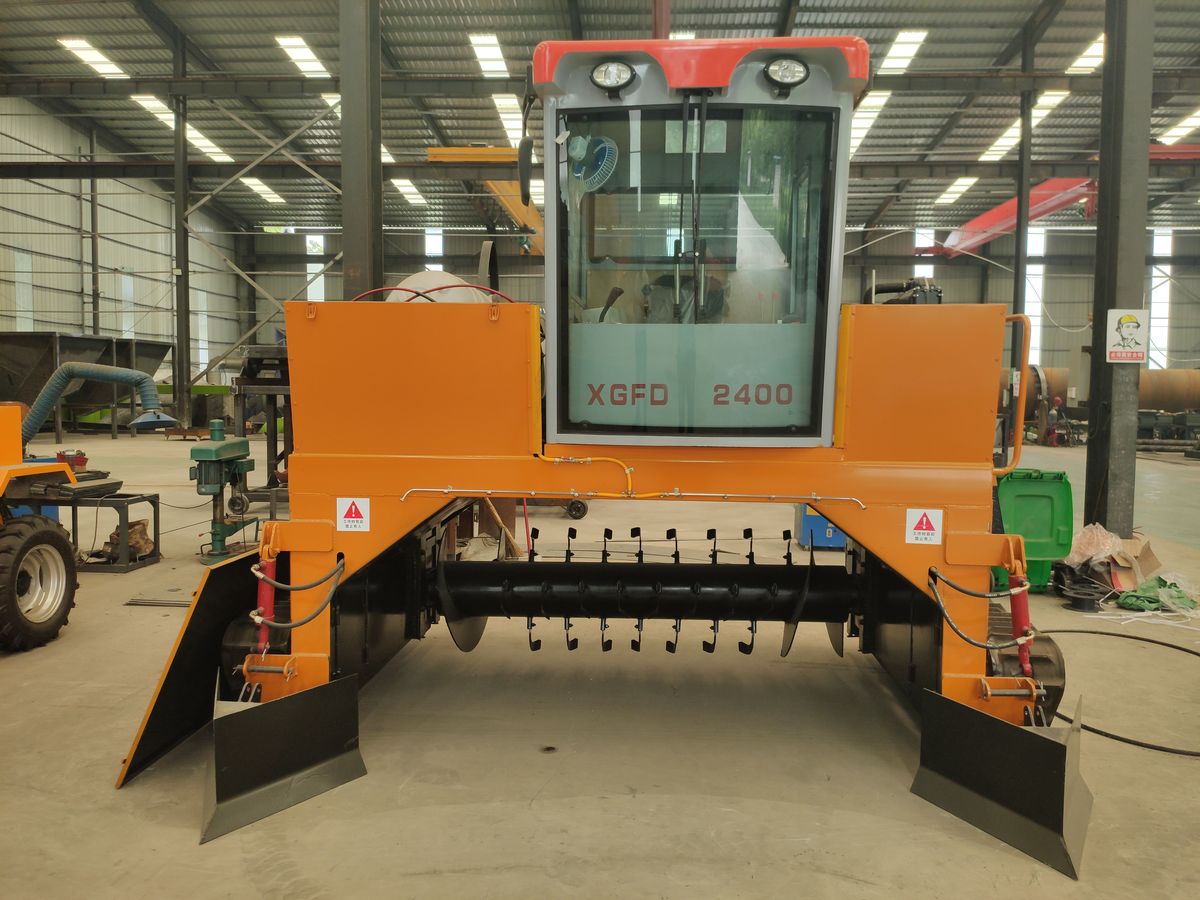
Both of them belongs to compost windrow turner, which is suitable for windrow composting. Self-propelled compost turner adopts four wheels, which is easy to operate and suitable for both working in outside site or in workshop. Meanwhile, the crawler type compost turner adopts rubber track chassis, which has less damage to the ground and small ground pressure. Moreover, it is vibration free. Finally, both of them can be used for farm, municipal and industrial composting. Via Shunxin compost windrow turner, you can redistribute cooler and hotter parts of the pile, improve porosity and release extra heat by periodically turning, so that you can get high-quality pig manure compost in a short time.
Furthermore, we can equip some auxiliary facilities for you, such as automatic sprinkling device. Finally, they are featured with low investment, low consumption and high production capacity.
Whether you want to make compost fertilizer or fertilizer pellets, you need to guarantee the uniformity of pig manure compost. Here, you may need two machines, new type vertical crusher and rotary screen machine. The former utilizes chains and blades to crush caking and larger particles to ideal requirements. The rotary screen machine has different screening level, so that it can separate too small and too large particles out, so as to guarantee the uniformity of pig manure compost.
There are three types organic fertilizer granulator, which is available for making pig manure fertilizer pellets, disc granulator, new type pig manure fertilizer granulator and rotary drum stirring granulator. All them adopt wet granulation, and make fertilizer pellets by mechanical force and water. Disc granulator is most common granulator, which is low cost and easy to operate. New type pig manure fertilizer granulator makes fertilizer granules by mechanical stirring force, and its granulation rate can achieve 97%. The structure and function of rotary drum stirring granulator are more compact and stronger than the former two granulators. The pellets made by it is more beautiful and have higher hardness. You can choose suitable one, according to your actual requirements.
Because mentioned granulator adopts wet granulation, you need to remove extra moisture to achieve standard moisture (below 15%). Shunxin rotary drum drying and cooling machines can help you. The drying machine take away extra moisture by heating. Then, the cooling machine will cool these pellets into ambient temperature, which is convenient for next process. Here you can build a hot blast furnace to provide heat for drying and dust collector to collect dust produced during drying and cooling. In addition, you can use agricultural waste pellet fuel, coal or gas as the fuel to provide heat.
For commercial production of pig manure fertilizer, packing is essential. In order to improve packing efficiency during pig manure management, we design two types fertilizer bagging machine, separately for compost fertilizer and fertilizer pellets. According to weighing method, it includes no-bucket (weighing when filling, which is a little slow) and bucket (filling after weighing, which is quicker) packaging machines. According to working efficiency, it includes single-bucket and double-bucket (which can fill bags with different scales at the same time). And according to packaging scale, it includes 25kg/bag, 50 kg/ bag and 1 ton/bag. In addition to pack organic fertilizer, it also suitable for grain, compound fertilizer and other industries.
For small farm or beginner in organic fertilizer industry, we recommend small scale pig manure fertilizer production. All of our organic fertilizer making machines have small size. In addition, if you have any special requirements, we can design pig manure management plan and customize equipment for you. And the small-scale pig manure fertilizer machines and their parameters are as below:
Machine name Model Capacity (t/h) Size (mm) Semi-wet material crusher SEECFLF-600 1-1.5 1200*1350*900 Disc mixer SEECPJ 2-4 1600*1600*1600 New type pig manure fertilizer granulator SEECJZ-600 1-1.5 4100*1600*1150 Small scale pan granulator SEECYZ-1500 0.5-0.8 1760*1500*1950 Rotary screen machine SEECGS-1020 1-2 Accept cutomization
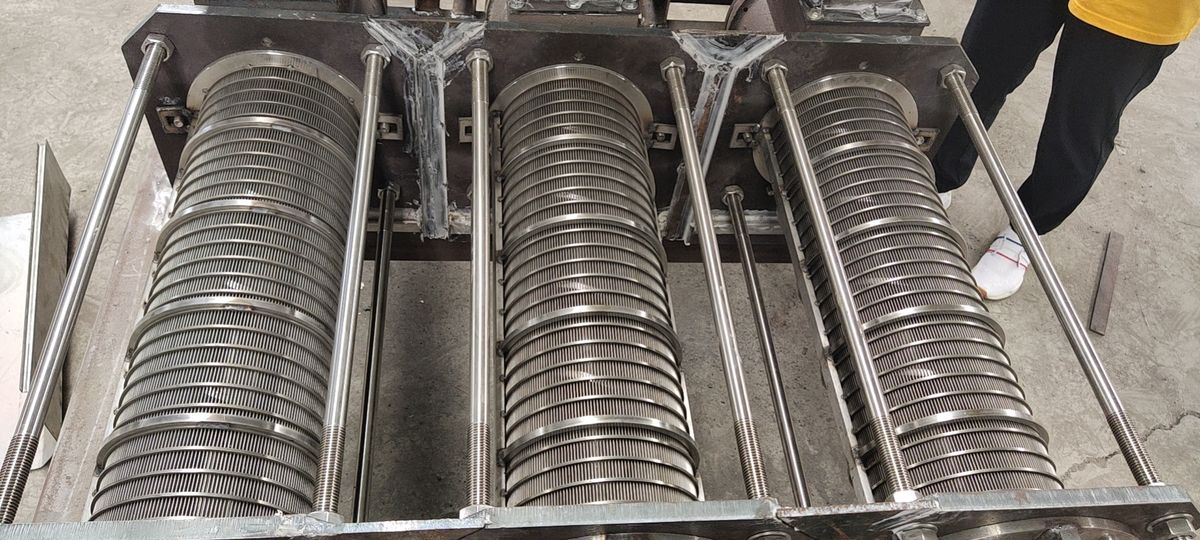
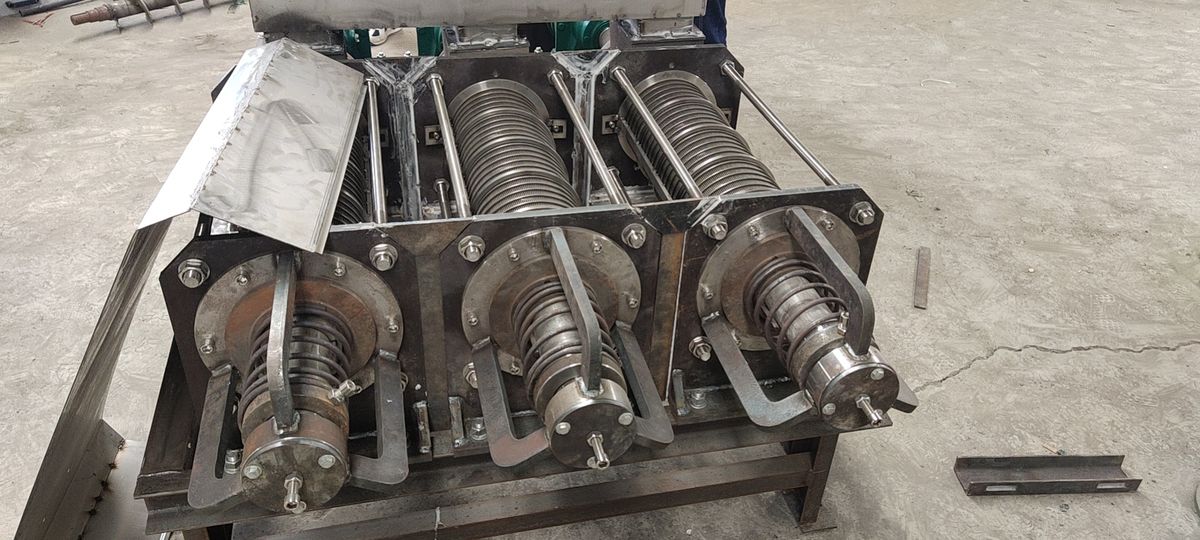
The high water-content makes pig manure management become more difficult. Therefore, how to remove extra liquid from pig manure? Shunxin manure separator can be you best choice. This manure separator utilizes screw extrusion to separate extra liquid. The dewatered pig manure will come out from one end of the machine.
At the same time, the liquid will flow out from the mesh on the cylindrical screen and discharge by pipe. The minimum moisture of dehydrated pig manure can achieve 30% to 40%. You can use it for making organic fertilizer or fish food. In addition, this separator has strong decontamination ability, which can effectively prevent clogging and is easy to clean. What’s more, if you have much pig manure with higher water content (about 90%), you can also adopt Shunxin inclined screen solid liquid separator. This kind of separator is featured with high output, easy operation and high efficiency. Like pig manure management, this separator is also suitable for dealing with other livestock manures, such as horse manure management and cow dung treatment.
Composted pig manure belongs to quality organic fertilizer, which is nutrient-rich and has no adverse effect to soil. On this basis, you can also make bio organic fertilizer from pig manure. After crushing, you can add functional bacteria by batching machine and blend them evenly. You can finish this operation manually. Or you can adopt Shunxin batching machine and fertilizer mixer machine. For large scale bio organic fertilizer production and bio organic fertilizer pellets production, batching machine and fertilizer mixer are essential, which can improve working efficiency and guarantee fertilizer quality. Or you can add functional bacteria by pellets coating machine after granulating.
The composting process is the first step in pig manure disposal. Due to its influence on final quality of fertilizer, it is also the most key step. Thus, you must pay more attention to various indicators. Among them, you should focus on moisture, temperature and oxygen content. Meanwhile, this point is also important during dealing with other livestock manures.
Before composting, you should adjust water content of pig manure to 50% to 60%. You can add straw powder or sawdust, which has strong water absorption. Or you can use Shunxin solid liquid separator to remove extra water. Because too wet will cause bad ventilation. Too dry will slow heating of compost pile. During composting, you can also sprinkle water according to actual conditions.
You should observe the temperature of compost pile by thermometer. You should turn the compost pile when the temperature reaches 50℃,. Because too higher temperature (above 65℃) will kill good bacteria and microorganism. In the first week, you can turn the compost frequently, 2 to 3 times a day. During the later period of fermentation, you can reduce to 1 time every two days. Because the organic materials nearly run out in the final part. You can adopt compost turner, which can evenly blend outer pig manure and pig manure inside the compost pile.
Microorganism digest or decompose organic matters in pig manure while consuming oxygen. When the oxygen is deficient, the microorganism activity will slow. Therefore, you should ensure the ventilation of compost pile. With the help of turning of compost turner, pig manure can fully contact with air. At the same time, the addition of air can also decrease the temperature of compost pile.
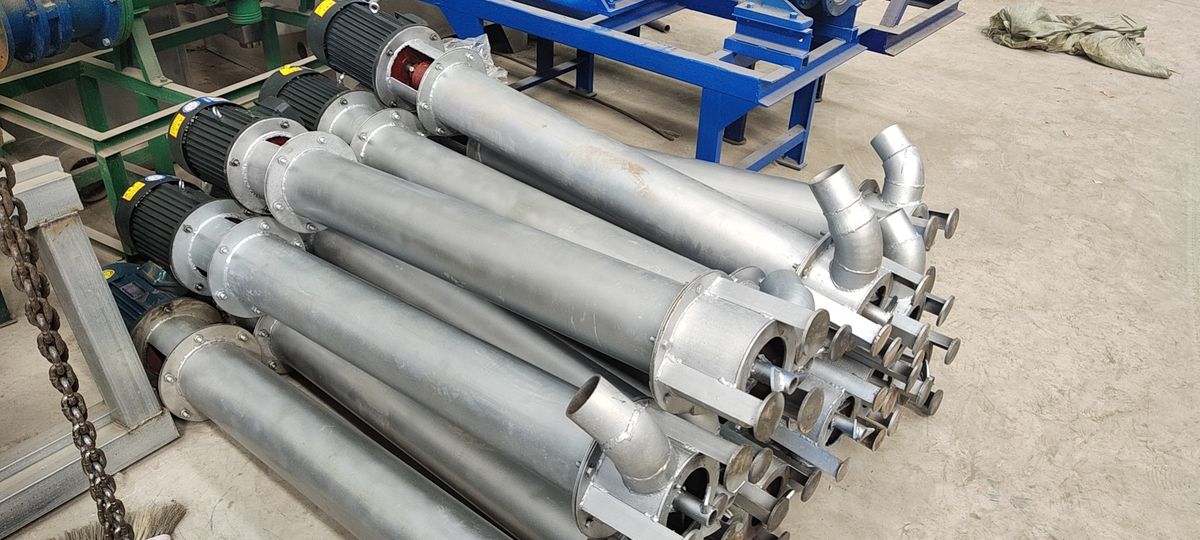
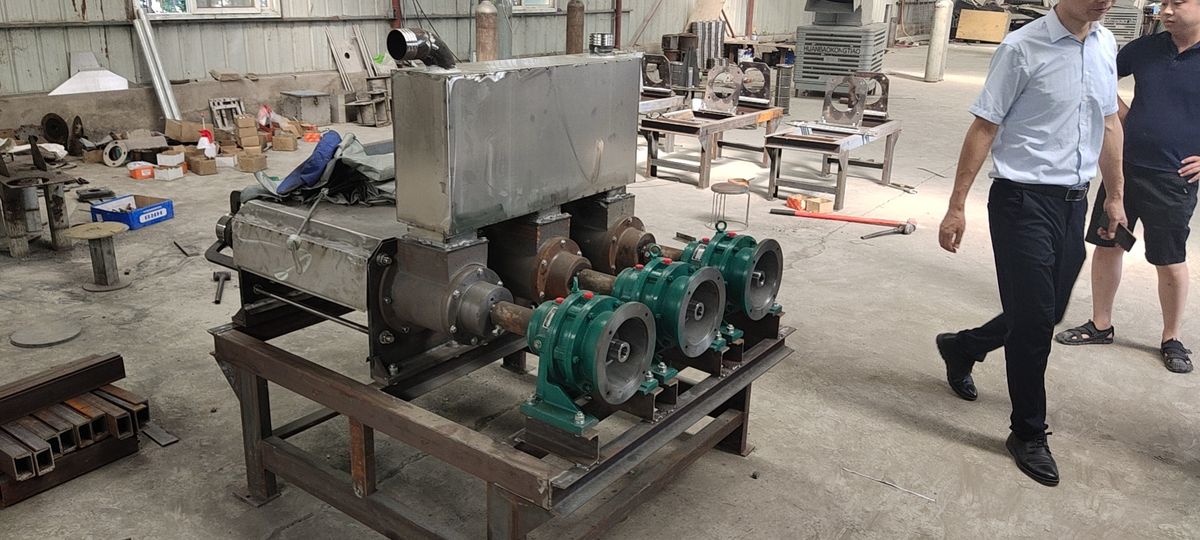
Photographed in our Xingyang workshop and on customer sites. Watermark-free, no phone numbers.
Fresh pig slurry should not be applied directly to growing crops. It is high in soluble ammonium nitrogen and salt, it carries pathogens, and the organic matter can cause temporary nitrogen immobilisation in the soil. Applied to pasture after separation and dilution, and within the farm's nutrient balance, it is a valuable fertilizer. Applied to crops for human consumption it must be composted or otherwise treated first.
Separate it first — that step is unavoidable and it determines everything downstream. After separation you have two decisions: on the solid side, whether to compost to bulk compost or to pelletise into bagged fertilizer; on the liquid side, whether to use it for fertigation, feed a biogas digester, or treat it further. The right combination depends on your land area, your energy costs and whether you have a local market for bagged organic fertilizer.
Four measures, in order of effectiveness: separate the liquid promptly so slurry does not sit anaerobically; cover the liquid storage so ammonia and sulphides are not released continuously; keep the composting pile aerobic by turning and maintaining 50–60% moisture; and add a carbon source and inoculant so that nitrogen is captured in the biomass. Where the farm is near housing, a biological filter on any enclosed fermentation is the finishing measure.
The solid fraction does, once composted. Pig manure compost is rich in organic matter and contains useful phosphorus and potassium, and it makes a good general-purpose organic fertilizer. Its nitrogen content is lower than poultry manure's, so if you intend to declare a nutrient analysis you will usually blend it with a mineral nitrogen source or with poultry manure. Its fine texture means it needs slightly more binder than cattle manure compost when granulating.
It depends on the nitrogen limit for your soil and crop, which is set by regulation in most countries. As a general illustration, a 1,000-head finishing unit producing around 15 m³ of slurry a day requires a substantial arable area — often 100 hectares or more under typical European nitrogen limits. That arithmetic is the reason large pig units process their manure into a transportable fertilizer rather than relying on land application.
How to compost pig manure: separate the slurry, blend with carbon material, build and turn the windrow, and produce ma…
Read more →Manure separators dewater pig, cow and poultry slurry from 90% to 60–65% moisture in one pass, so solids can be compos…
Read more →Manure management guidance for every farm animal: how cow, pig, poultry, horse and goat manure differ, how to handle a…
Read more →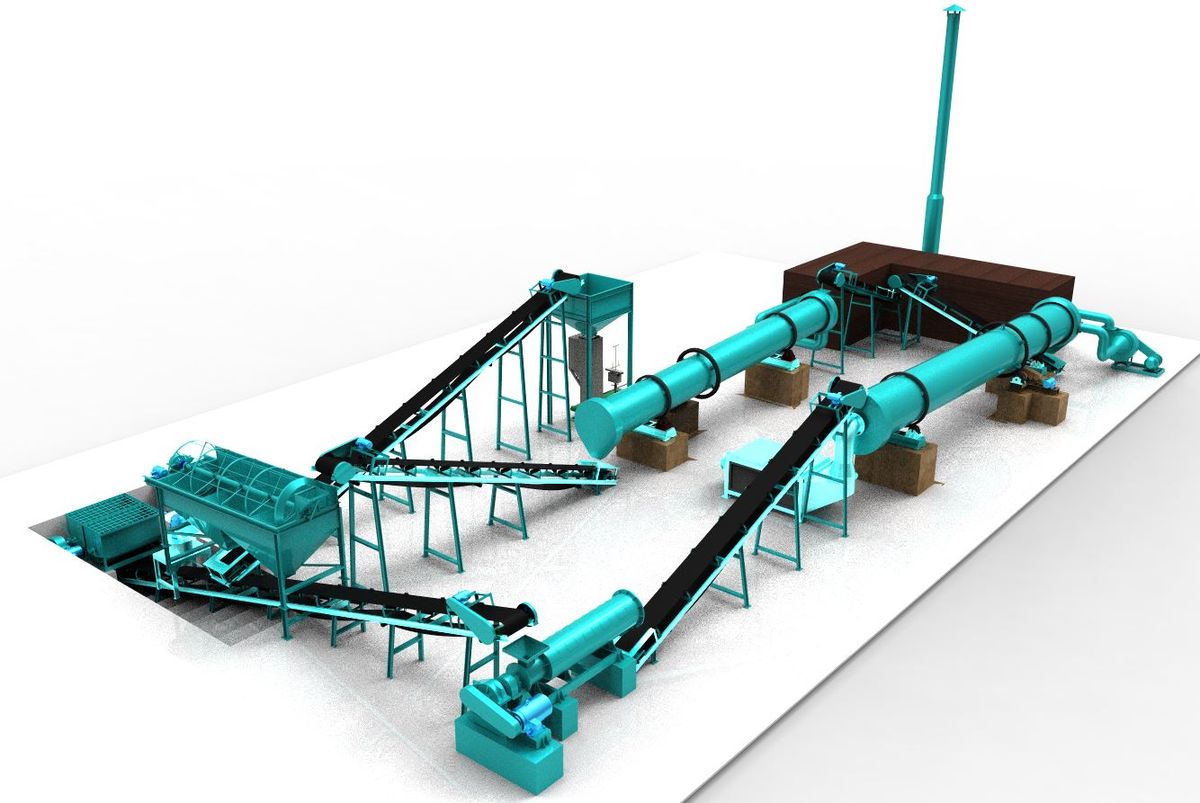
Complete manure to fertilizer solutions: separation, fermentation, crushing, screening, granulation, drying and baggin…
Read more →Send your raw material, target capacity and country. Our engineers reply within one working day with a process route, equipment list and budget.
Send us your raw material and target capacity — we will propose the process, the machines and the budget.
Send your raw material and target capacity — our engineers reply within one working day with a process route, equipment list and budget.
Our engineering team will reply within one working day. For anything urgent, message us on WhatsApp.
Open WhatsApp