
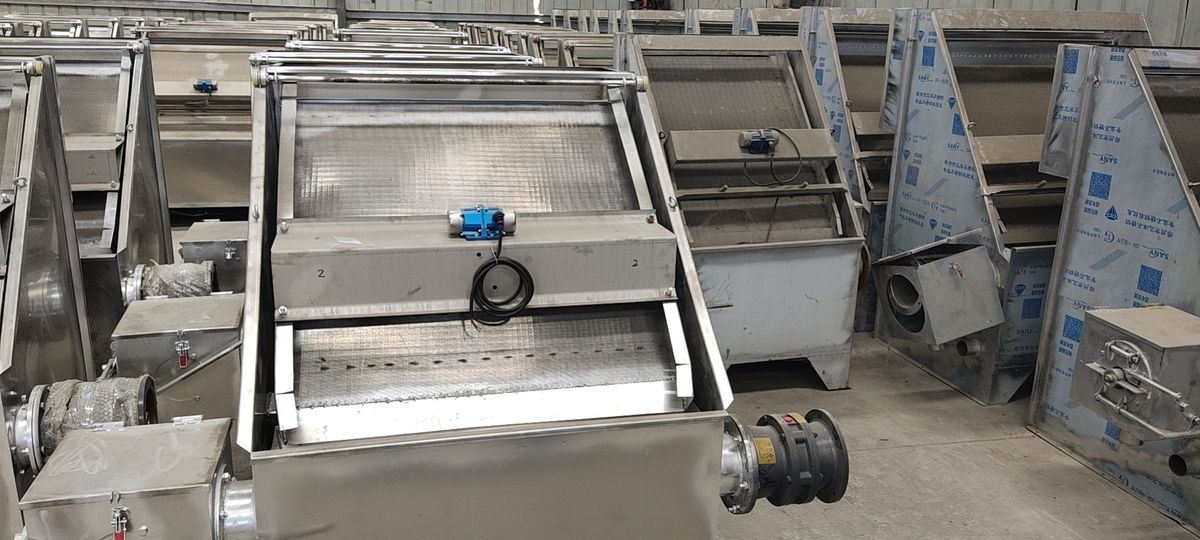
Pig slurry
The classic application. Pig slurry is 90%+ water and cannot be stacked. Separation produces a solid for composting and a liquid high in potassium and ammonium nitrogen for fertigation or biogas.
View details →A screw-press solid liquid separator that removes 40–60% of the volume as liquid and discharges a stackable solid at 60–65% moisture — the correct starting point for composting and fertilizer production.
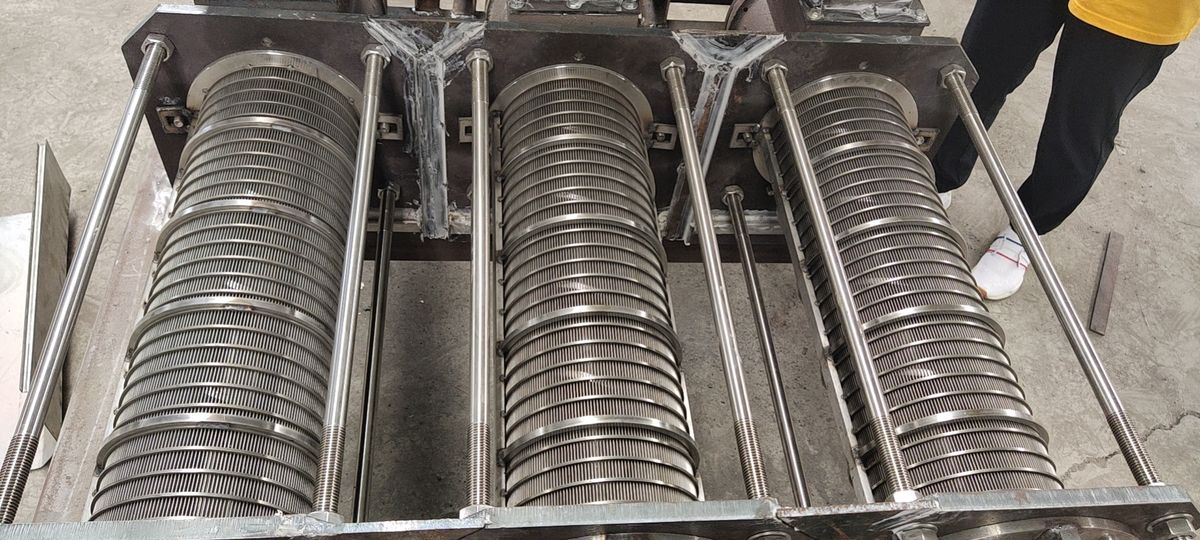
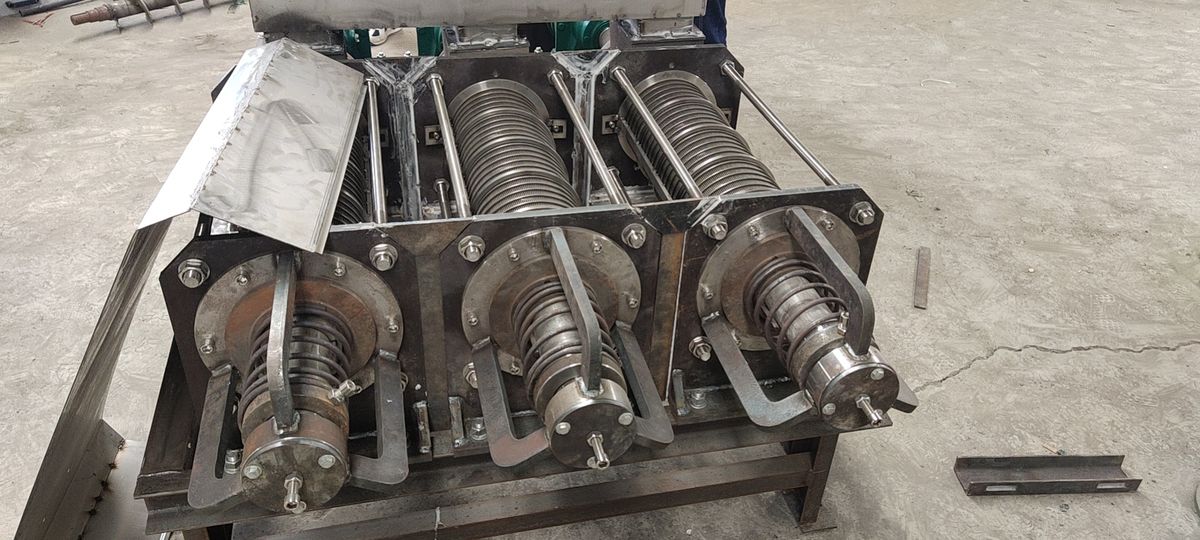
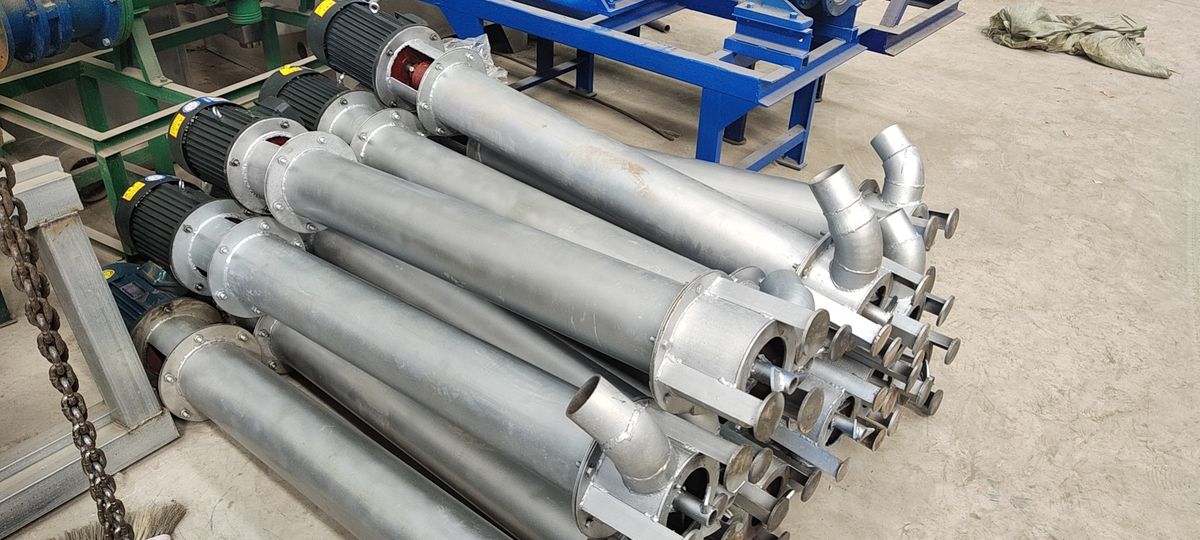
A manure separator presses free water out of slurry through a stainless steel screen cylinder. The screw auger rotates inside the screen and pushes the solids against a pressure cone at the discharge end; the water escapes through the perforations and is collected below. The pressure, and therefore the dryness of the solid, is adjusted mechanically at the cone, so the same machine can be set coarse and fast for high throughput or harder and slower for a drier product.
Two families cover most farm situations. The screw-press separator is the workhorse: it handles pig and dairy slurry, poultry wash-down, slaughterhouse effluent and biogas digestate, and discharges solids at 60–65% moisture that can be piled and turned immediately. The inclined-screen separator is the simpler, cheaper option for farms taking a first step into manure treatment; it uses gravity over a vibrating wedge-wire screen rather than a press, needs almost no maintenance, and leaves the solid slightly wetter at 65–72%.
The decision that matters is when to separate, not whether. Separating before composting cuts the fermentation floor area, shortens the composting cycle, removes most of the odour source and reduces the size — and therefore the price — of every machine downstream, including the dryer. It also gives you a liquid stream with real agronomic value that can be applied to pasture or fed to a digester rather than being lost into a lagoon.
The same machine serves several industries; the settings change with the material.
The classic application. Pig slurry is 90%+ water and cannot be stacked. Separation produces a solid for composting and a liquid high in potassium and ammonium nitrogen for fertigation or biogas.
View details →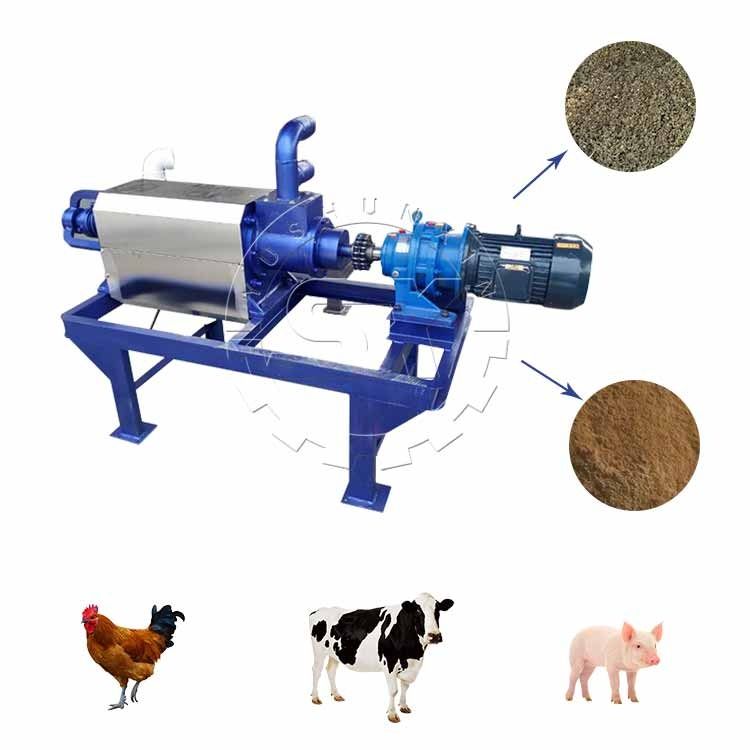
High fibre content separates easily, and the solid fraction composts into excellent humus. The liquid fraction goes to pasture irrigation or a lagoon.
View details →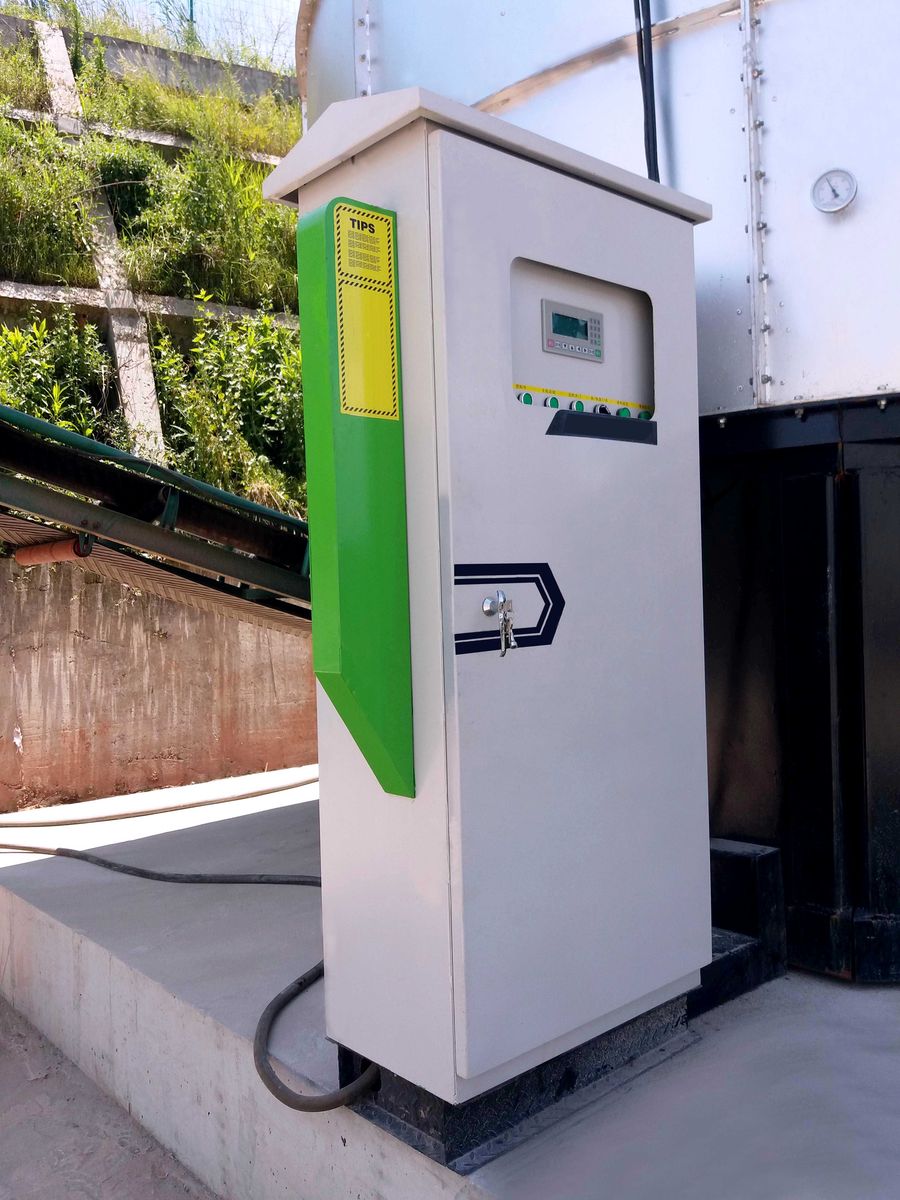
Poultry sheds produce dilute, nutrient-dense wash water. A separator with a finer screen recovers the solids and leaves a liquid that can be irrigated after dilution.
View details →Digestate is fine, homogeneous and difficult to dewater with a standard press. A decanter centrifuge or drum thickener is usually the correct choice for the liquid stream.
View details →High organic load, fine solids and a strong odour. Separation is normally combined with flocculation to meet discharge limits.
View details →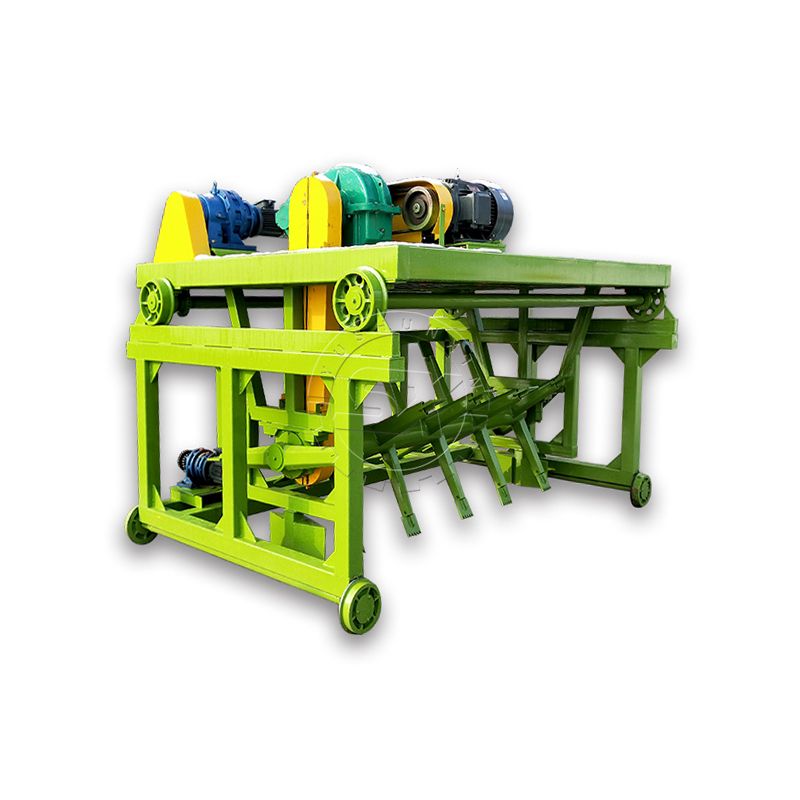
Bedding-heavy material is better handled by screening and composting than by pressing; a separator is used only where a wash-down stream must be treated.
View details →| Screw-press separator | Inclined screen separator | Decanter centrifuge | |
|---|---|---|---|
| Best material | Pig, dairy, poultry wash-down, digestate | Dairy slurry with high fibre | Fine solids, digestate, food processing effluent |
| Capacity | 3–40 m³/h | 8–15 m³/h | 5–40 m³/h |
| Moisture of solid | 60–65% | 65–72% | 55–65% |
| Power | 4–11 kW | 1.5–4 kW | 15–45 kW |
| Maintenance | Screen and auger are wear parts | Very low | High-speed rotating assembly, specialist service |
| Relative capital cost | Low | Lowest | Highest |
| Best for | Most farms and fertilizer plants | First-step, low-budget installations | Industrial and municipal scale |
For dealing with high-moisture organic waste, the first step is to remove extra water. This kind of organic waste includes cow manure, pig manure and some farm wastes. By screw extrusion, it can realize the dehydration of organic wastes. Shunxin produces two types manure separators, solid liquid separator and inclined screen for solid liquid separation. According to our experience, we summarize the following questions. And we hope they are useful to you.
The input of organic w aste: 8-15 cubic meters per hour.
The output of dehydrated organic waste: 1.5-3 cubic meters per hour.
2. What’s the materials of the whole machine?
All parts that contact with organic waste adopt SUS 304 ( such as hopper screen and auger).
4. Is the pressure (dehydrating level) increased by hand with tools or is it electric ?
You need to adjust the pressure of manure separator by hand with tools.
5. What’s the moisture of organic waste after dehydrating?
Generally speaking, it ranges from 25% to 40%. But you can adjust it according to your actual requirements.
6. What’s the hp of electric motor and the available voltage(110 V/220 V)?
The motor power is 4 Kw. The voltage can be designed and adjusted according your requirements.
Its size is 0.3-0.5 mm. And the customized size can achieve 0.1-0.3 mm.
9. Where can I use separated liquid from animal manure?
10. How to deal with organic waste after dewatering?
You can make a compost pile and produce organic waste compost, which can be used as organic fertilizer. Then, you can make bagged fertilizer powder or pellets for commercial purpose.
Note: During composting, the content of animal manure is at least 60%.
If you have other problems and requirements, please contact us !
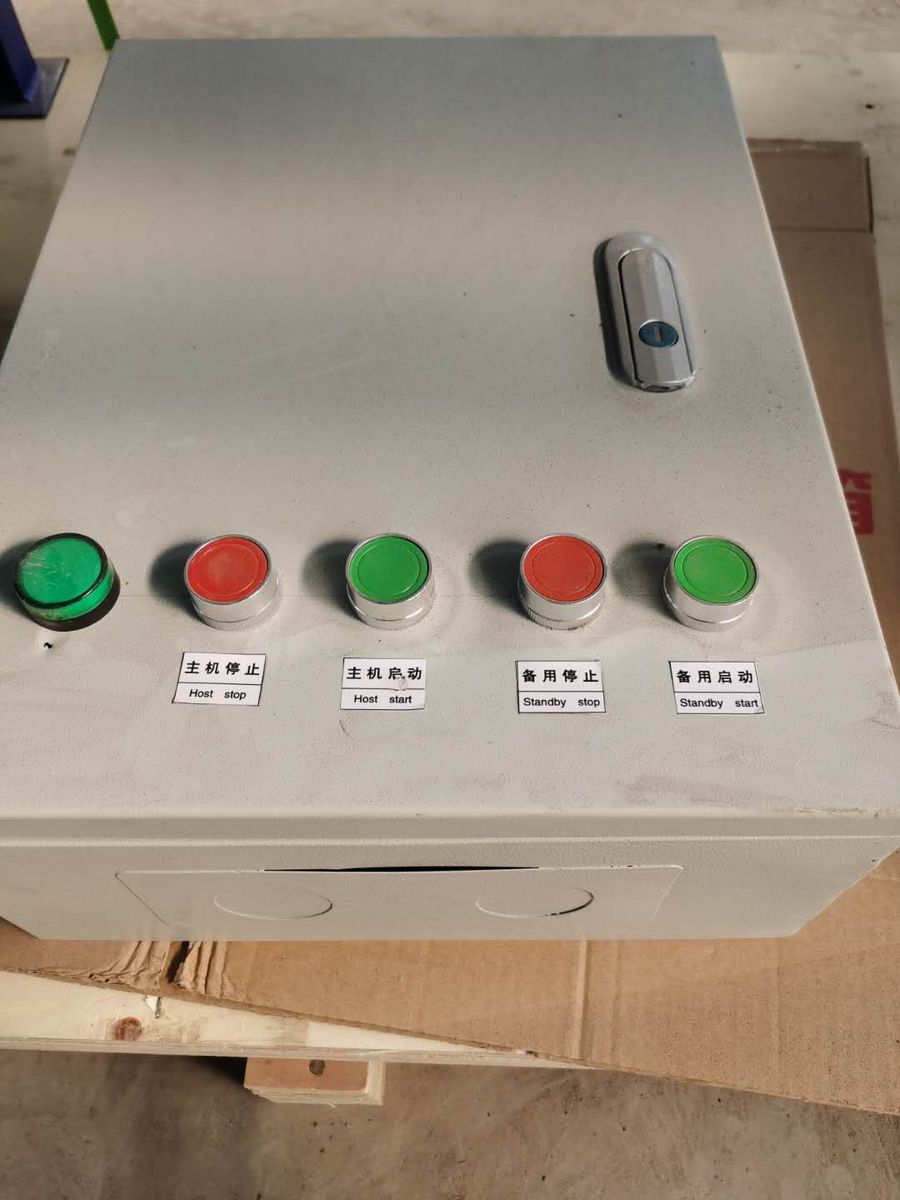
Photographed in our Xingyang workshop and on customer sites. Watermark-free, no phone numbers.
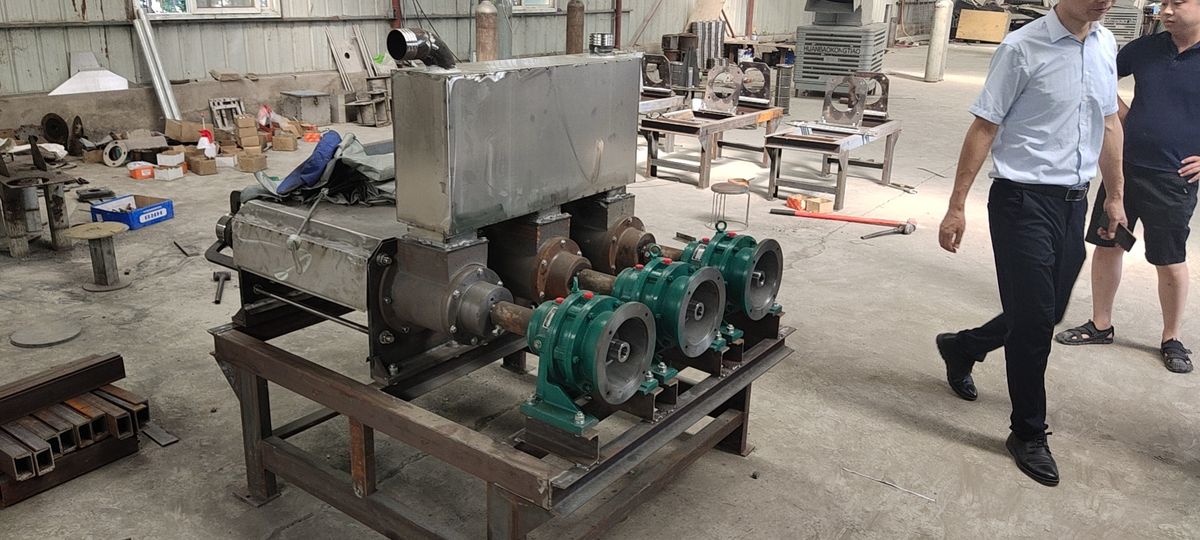
Any pumpable slurry with a solids content of roughly 5–20%: pig and dairy slurry, poultry manure wash-down, slaughterhouse effluent, biogas digester residue and food processing waste water. Dry, stackable manure that can be piled does not need separation, although it may still be screened to remove stones and to even out particle size.
A screw-press separator typically removes 40–60% of the volume as liquid, depending on the fibre content of the slurry. The solid fraction still holds enough moisture for composting but no longer enough free water to run off the pile. High-fibre dairy slurry separates at the top of that range; dilute poultry wash-down at the bottom.
It is a dilute potassium and ammonium nitrogen solution. The usual options are direct fertigation onto pasture or crops, feeding a biogas digester, or concentration into a liquid fertilizer. It must be stored in a lined lagoon and applied according to local nutrient regulations; in many jurisdictions its nitrogen counts towards the farm's nutrient budget.
On our standard screw-press separators the pressure cone is adjusted by hand with a wrench, which is simple, robust and correct for the way the machine is actually operated — the setting is changed when the material changes, not continuously. Electric and hydraulic adjustment is available on request for installations where the manure stream varies during the day.
The screen cylinder and the screw auger are the wear parts. Flushing the machine after each shift and checking the screen weekly for blockage is usually enough. The screen is replaced after one to three years and the auger after processing several thousand tonnes, with both figures heavily dependent on the sand and grit content of the slurry.
Manure treatment equipment that makes raw animal slurry handleable: solid liquid separators, dewatering machines, drye…
Read more →Cow dung dewatering machines that take fresh cattle slurry from 80–90% to 60% moisture, cutting haulage volume and dry…
Read more →Pig manure management from slurry separation and lagoon control to composting and bagged organic fertilizer, with odou…
Read more →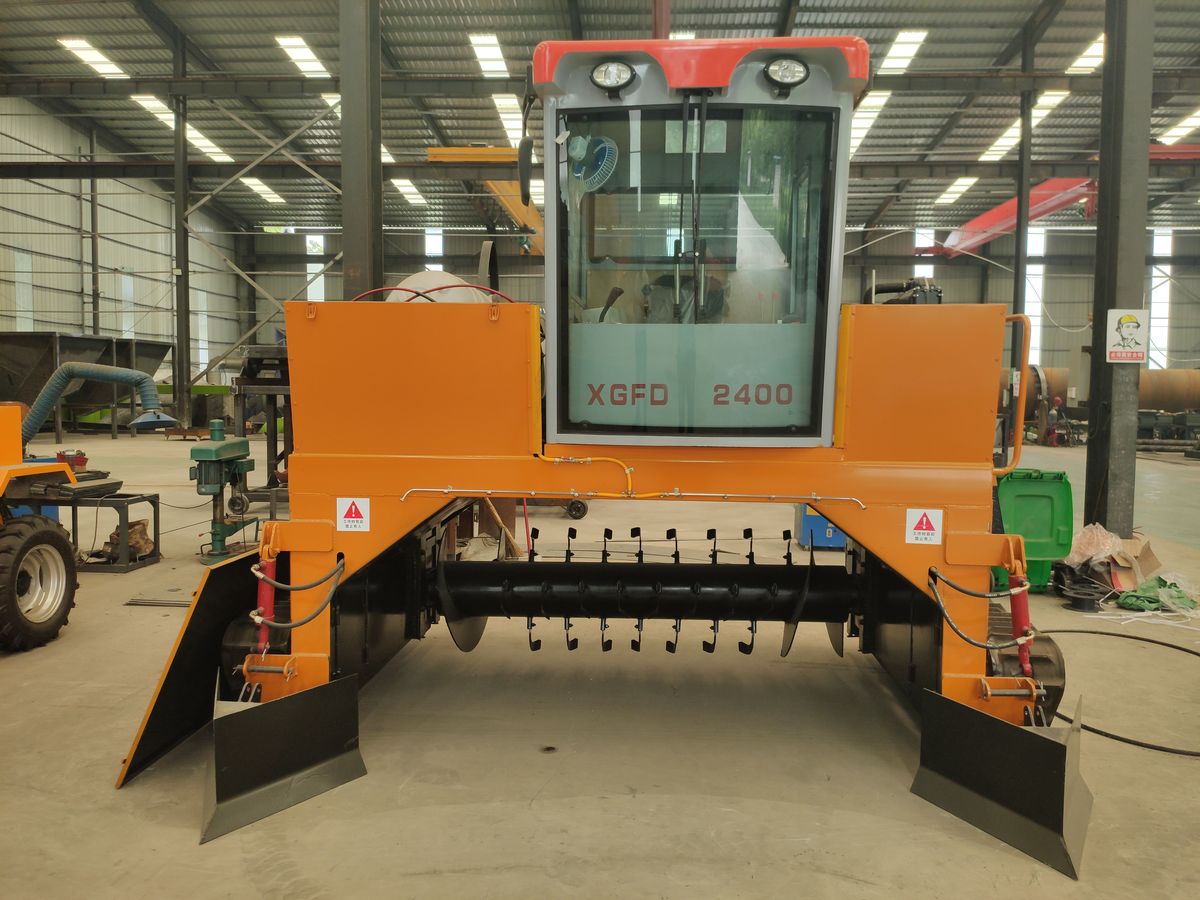
Manure composting systems: windrow, groove and in-vessel fermentation, how to design the pile, control temperature, ju…
Read more →Send your raw material, target capacity and country. Our engineers reply within one working day with a process route, equipment list and budget.
Send us your raw material and target capacity — we will propose the process, the machines and the budget.
Send your raw material and target capacity — our engineers reply within one working day with a process route, equipment list and budget.
Our engineering team will reply within one working day. For anything urgent, message us on WhatsApp.
Open WhatsApp