
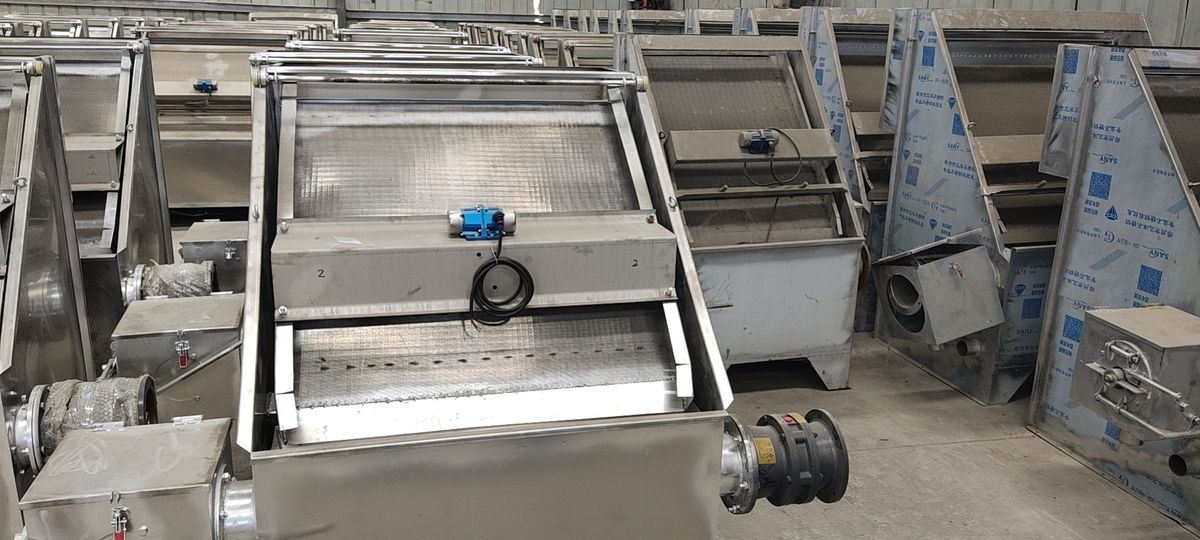
Solid liquid separators
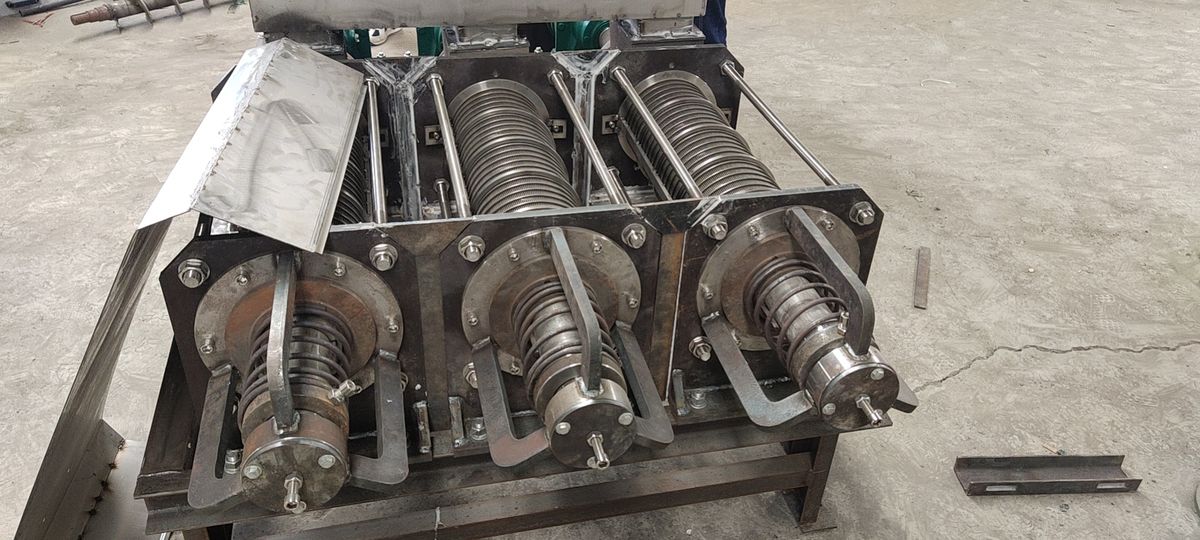
Screw-press and inclined-screen separators that split slurry into a stackable solid fraction and a liquid fraction for fertigation, irrigation or biogas.
View details →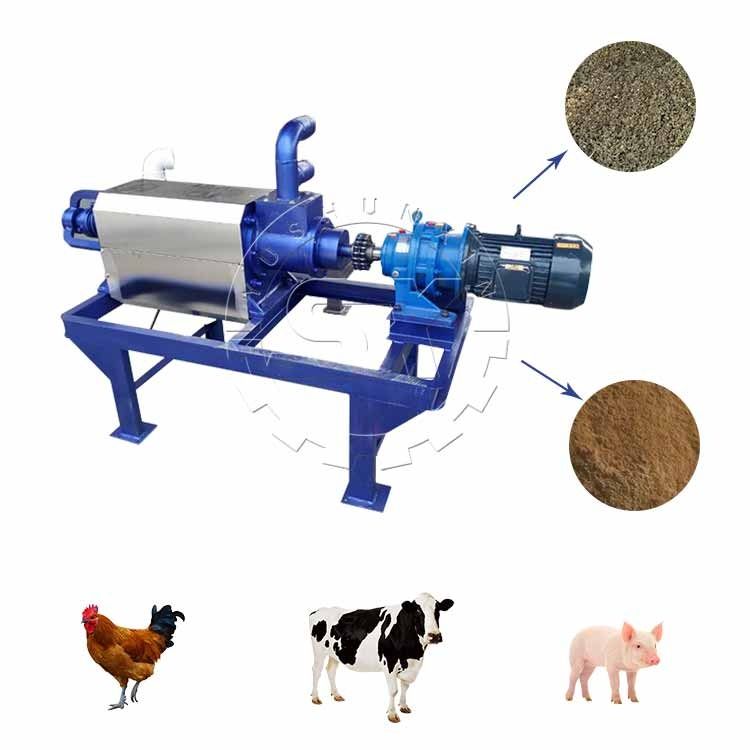
Every manure problem starts with water, and almost every project is saved or lost before composting begins. These are the machines that turn 90% moisture slurry into a solid you can pile, ferment and sell.
Fresh cattle slurry is 85–90% water; pig slurry can exceed 95%. In that state it cannot be piled, cannot be turned, cannot be fermented aerobically and would consume an enormous amount of fuel if you tried to dry it. A solid liquid separator removes 40–60% of the volume as liquid in a single pass and discharges a moist solid at 60–65% moisture — the exact starting point that aerobic composting needs.
Treatment is also the stage with the best return on investment, because every cubic metre of water removed before composting saves transport, floor area, turning fuel and drying energy downstream. Separating a litre of water with a screw press costs a fraction of evaporating the same litre in a rotary dryer. Farms that separate first routinely run smaller dryers, smaller turners and smaller buildings than farms that skip it, and produce a better product.
Beyond separation, treatment covers the machines that make material behave: shredders that open up straw and bedding, dryers that bring compost to the moisture granulation needs, screens that remove stones and plastic before they reach a granulator, and deodorising systems that let a plant operate near housing without complaints.
Each family below is a stage in the manure handling chain. Most plants need two or three of them, not all of them.
Screw-press and inclined-screen separators that split slurry into a stackable solid fraction and a liquid fraction for fertigation, irrigation or biogas.
View details →Higher-pressure presses, drum thickeners and decanter-type units for slurry that is too fine for a standard screw press, including digestate and wash-down water.
View details →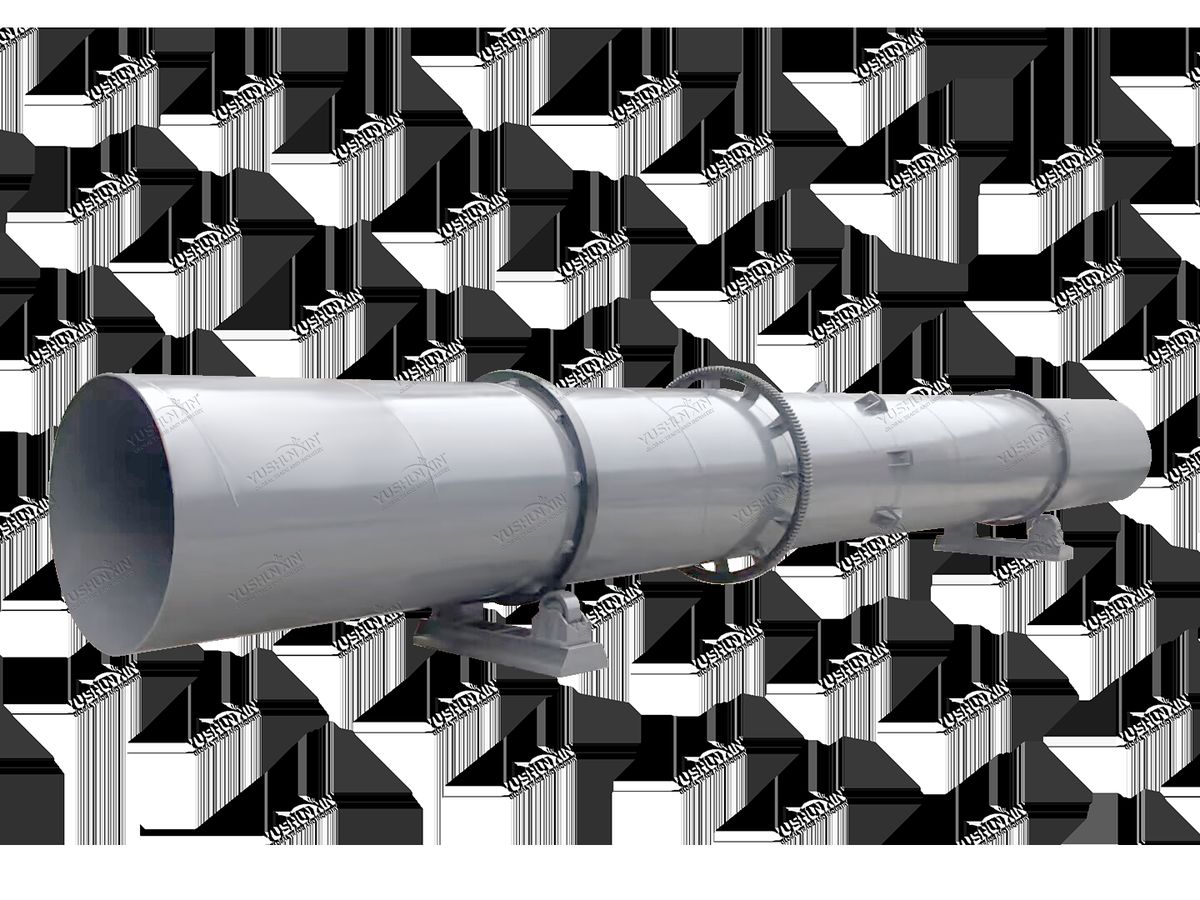
Rotary drum, triple-pass and poultry-specific dryers that take compost or wet manure down to 12–14% moisture, using gas, oil, coal, biomass or waste heat.
View details →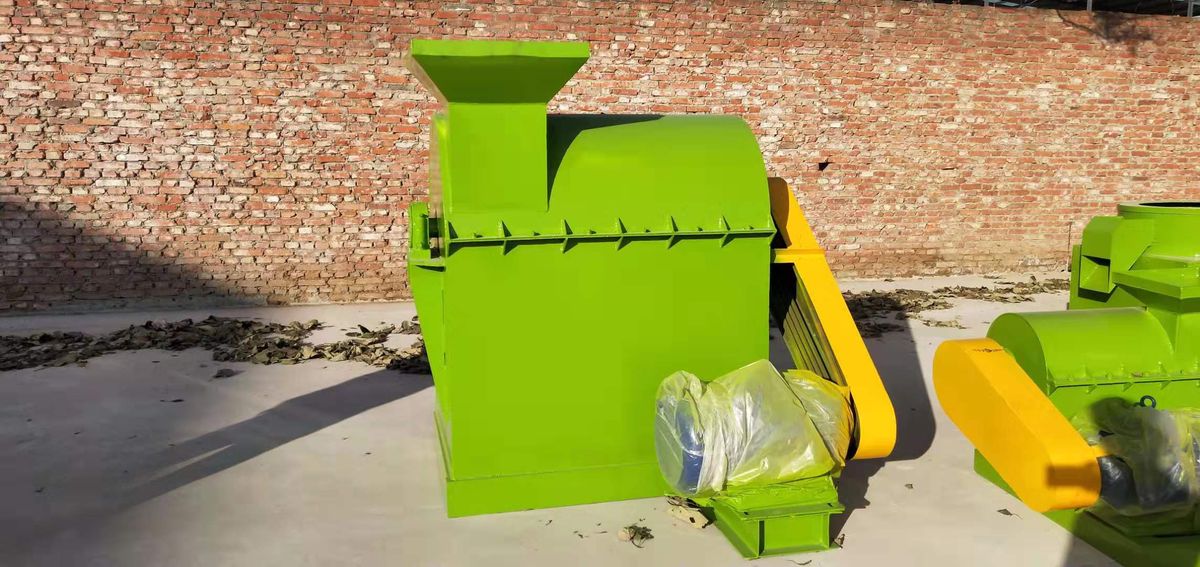
Semi-wet crushers, chain crushers, vertical cage mills and hammer mills that reduce compost and straw below 3 mm — the prerequisite for a high granulation rate.
View details →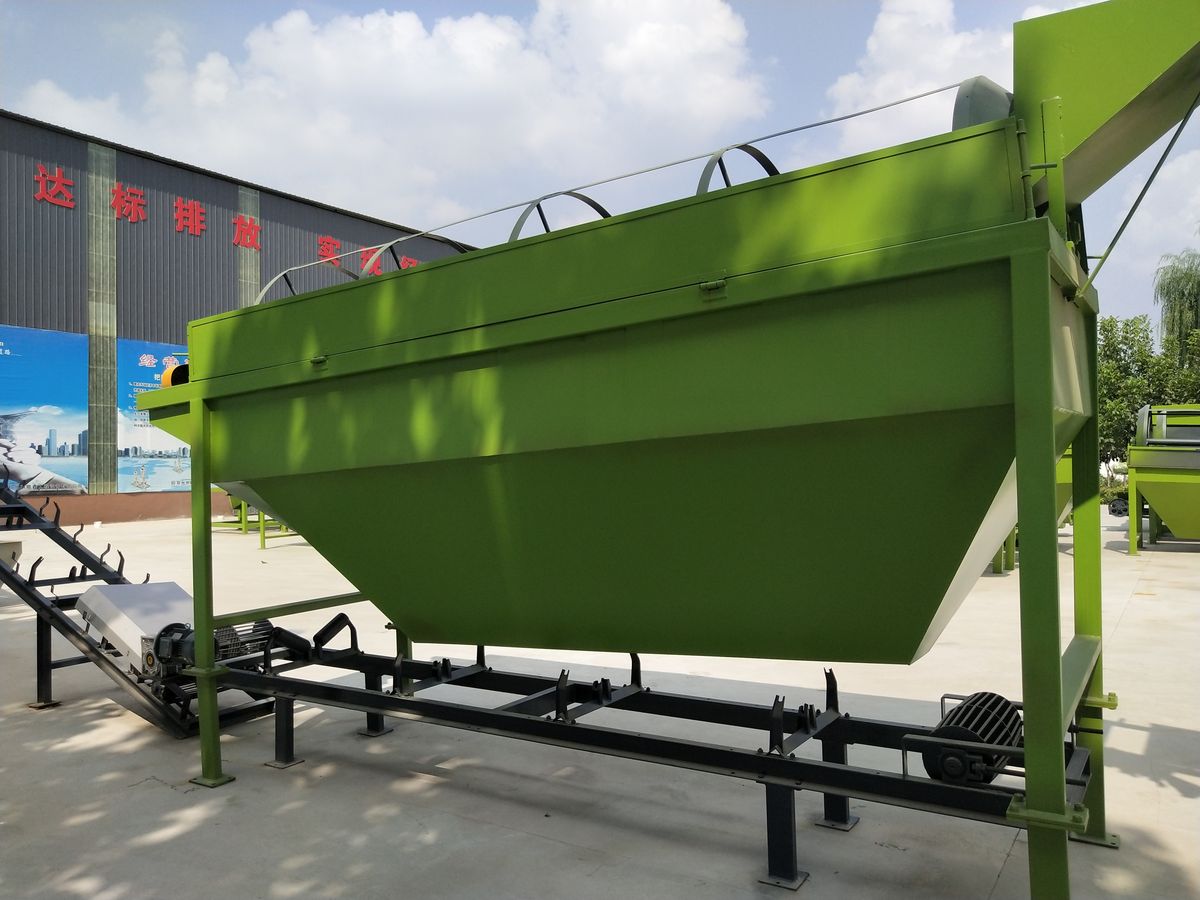
Rotary drum screens and vibrating screens with 1–5 mm mesh and a self-cleaning rubber ball system, separating finished product from oversize, stones and plastic.
View details →
Biological deodorising towers, forced aeration and covered fermentation for poultry and pig manure, and for any plant within smell distance of housing.
View details →| Machine | Best for | Capacity | Moisture out | Notes |
|---|---|---|---|---|
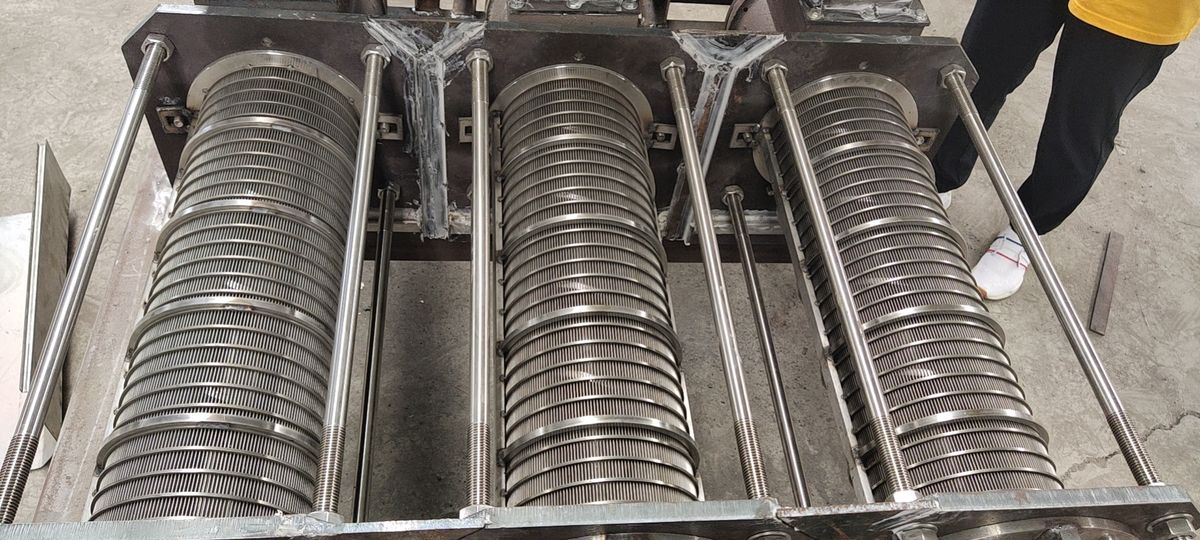
| Screw-press solid liquid separator | Pig and dairy slurry, biogas digestate | 3–40 m³/h | 60–65% | The workhorse. Stainless screen and auger, low power, simple maintenance, adjustable pressure |
| Inclined screen separator | Farms needing a simple, low-cost first step | 8–15 m³/h | 65–72% | No press; gravity dewatering. Cheap and virtually maintenance-free but leaves more water in the solid |
| Drum thickener / rotary screen press | Large dairy and municipal slurry | 20–80 m³/h | 62–68% | Higher throughput, continuous operation, needs more floor space |
| Decanter centrifuge | Fine solids, digestate, slaughterhouse wash-down | 5–40 m³/h | 55–65% | Best separation efficiency and the correct choice for fine particles, but higher power and capital cost |
| Dewatering press with flocculation | Very dilute wash-down water | 5–30 m³/h | 60–70% | Adds polymer dosing; used where the liquid must be clean enough to discharge or reuse |
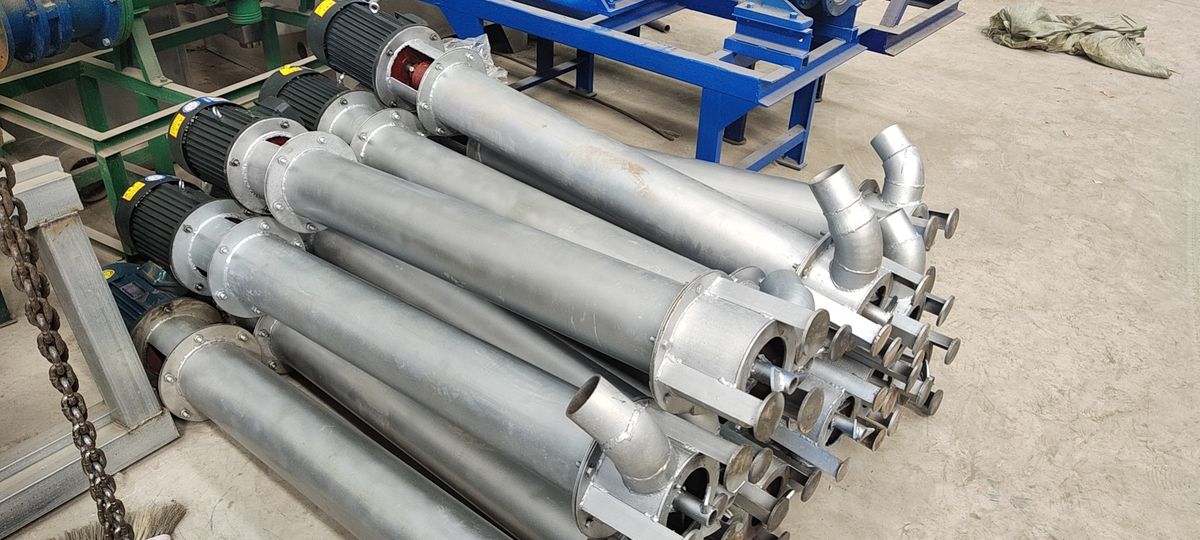
Photographed in our Xingyang workshop and on customer sites. Watermark-free, no phone numbers.
Dry manure that can be stacked — goat droppings, dried layer manure, horse manure with plenty of bedding — does not need separation. Pumpable slurry at 85% moisture or more does. Without separation the pile goes anaerobic, never holds 55 °C, produces strong odour and takes twice as long to stabilise, and you will also need a much larger fermentation area because the pile cannot be built high.
It is a dilute solution of potassium and readily available nitrogen. The usual options are fertigation onto pasture or crops, feeding a biogas digester, or further treatment and reuse as wash water. It must be stored in a lined lagoon and applied in accordance with local nutrient regulations, and in many markets its nitrogen content counts towards your farm's nutrient balance.
A screw-press separator of 10–20 m³/h typically draws 4–11 kW, so power cost is small compared with the transport cost it saves. The real running cost is wear parts: the screen cylinder and the auger. With daily flushing and weekly screen inspection, the screen lasts one to three years and the auger several thousand tonnes of slurry, depending on the sand and grit content of the manure.
It depends on what is cheapest and most reliable at your site. Natural gas and LPG give the cleanest, most controllable heat; diesel is convenient and portable; coal is the lowest cost per tonne of water evaporated in several markets but has emissions and permitting implications; biomass — including dried manure — is attractive where a boiler can be fitted and the calorific value of the manure is high enough. Our engineers will size the dryer around your chosen fuel, because the furnace design differs.
Four measures, in order of effectiveness: separate the liquid quickly so it does not sit anaerobically; keep the composting pile aerobic by turning and by maintaining 50–60% moisture; add a carbon source such as straw or sawdust so that ammonia is captured rather than released; and, where the plant is close to housing, cover the fermentation area and pass the exhaust air through a biological deodorising filter.
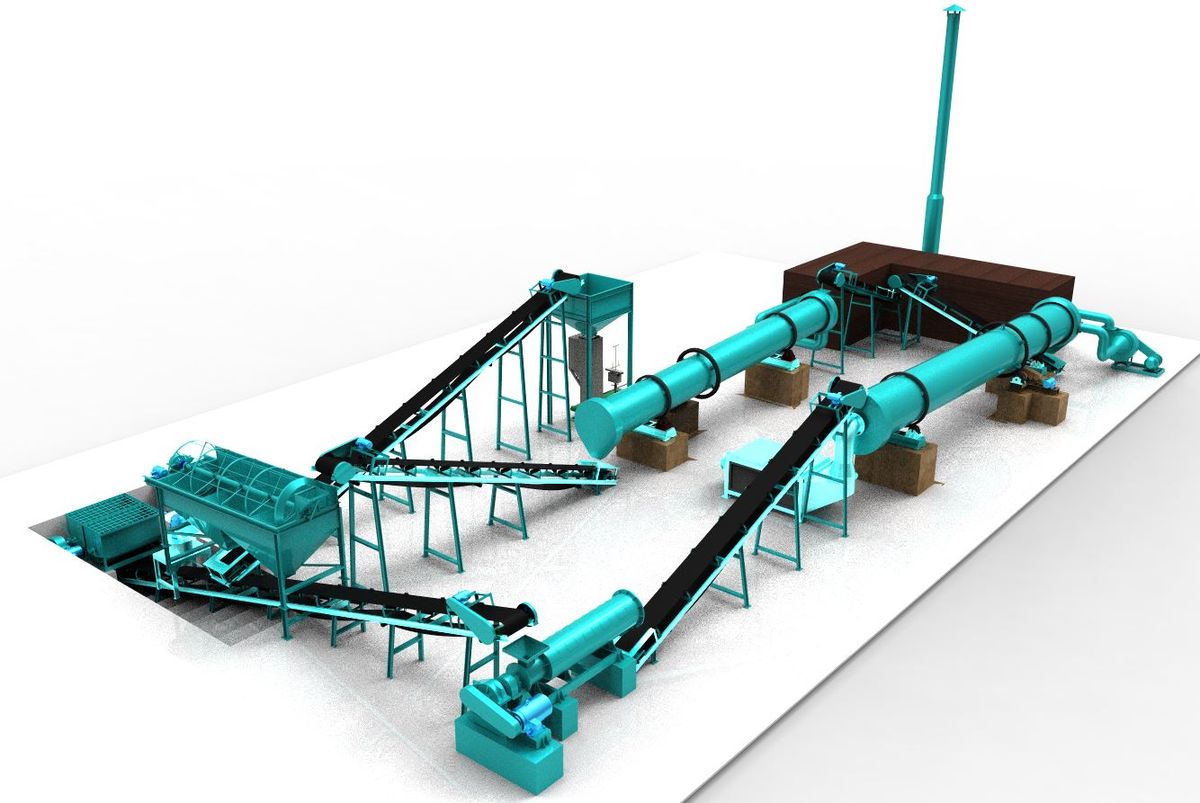
Complete manure to fertilizer solutions: separation, fermentation, crushing, screening, granulation, drying and baggin…
Read more →Manure separators dewater pig, cow and poultry slurry from 90% to 60–65% moisture in one pass, so solids can be compos…
Read more →Manure drying machines that take compost and wet manure to 12–14% moisture for granulation and bagging, in single-pass…
Read more →Compost screening equipment that grades manure compost into powder fertilizer and separates oversize, stones and plast…
Read more →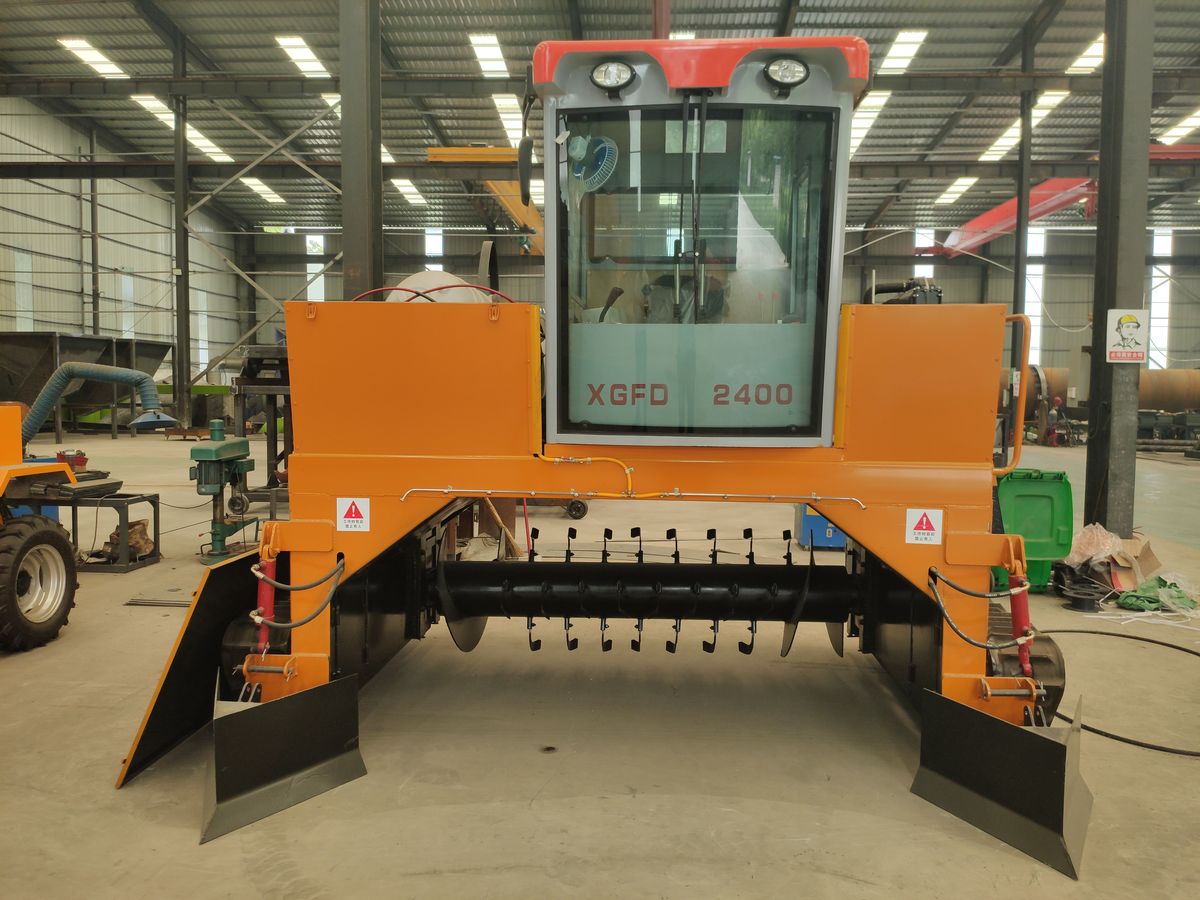
Manure composting systems: windrow, groove and in-vessel fermentation, how to design the pile, control temperature, ju…
Read more →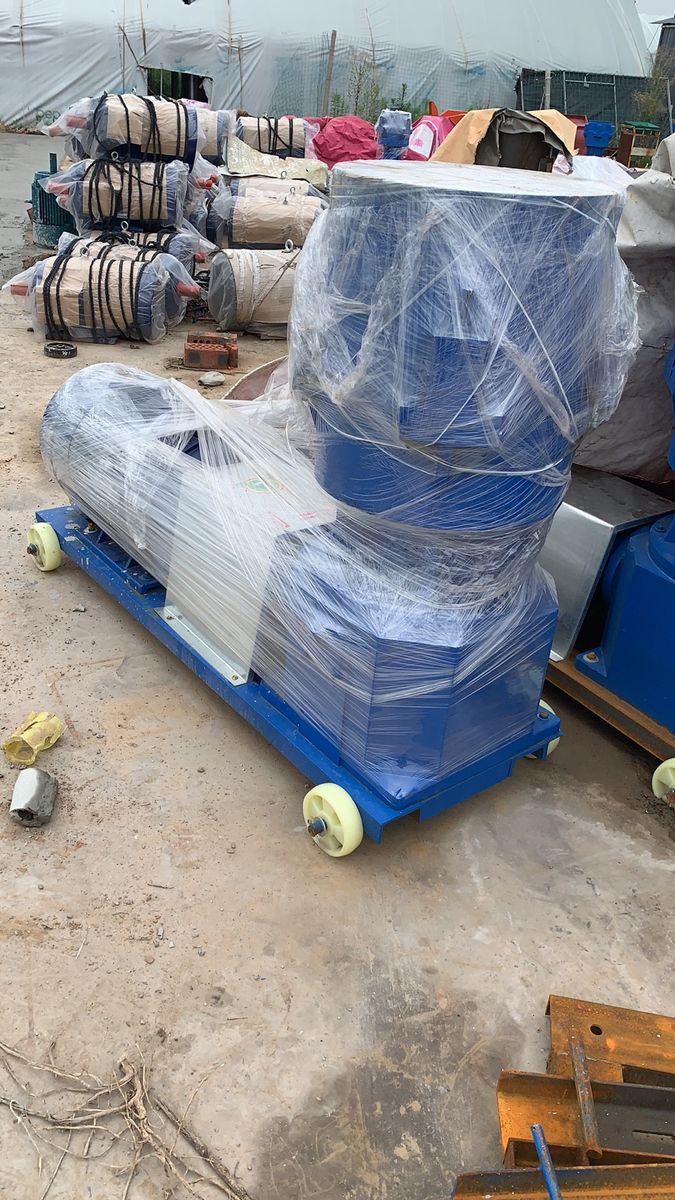
Manure fertilizer machines that turn compost into a product: granulators, pellet machines, powder lines, coaters, cool…
Read more →Send your raw material, target capacity and country. Our engineers reply within one working day with a process route, equipment list and budget.
Send us your raw material and target capacity — we will propose the process, the machines and the budget.
Send your raw material and target capacity — our engineers reply within one working day with a process route, equipment list and budget.
Our engineering team will reply within one working day. For anything urgent, message us on WhatsApp.
Open WhatsApp