
Manure Fertilizer Machines
Manure fertilizer machines that turn compost into a product: granulators, pellet machines, powder lines, coaters, cool…
Read more →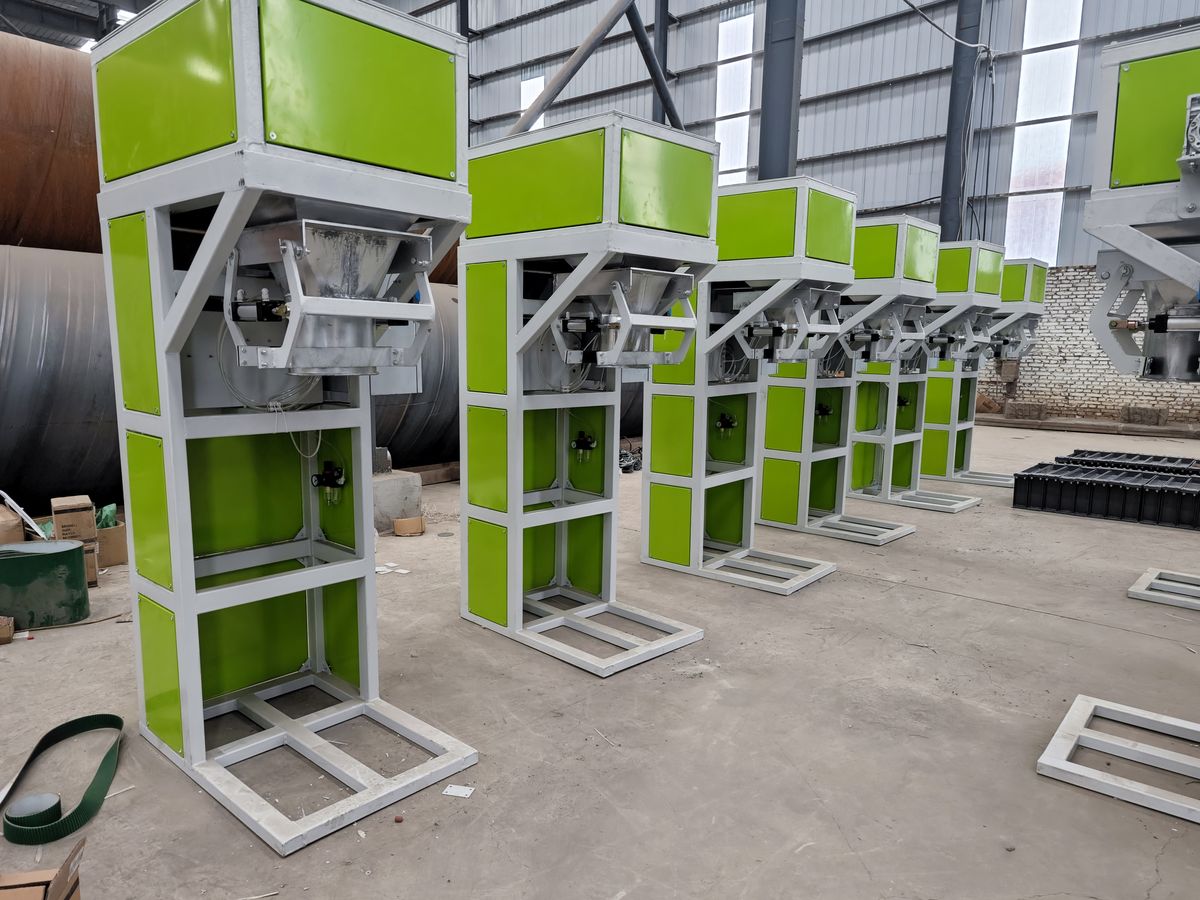
A bagging machine is the last machine in the plant and the one your customer sees first. Consistent weight, a clean seal and a legible label are what make a farm product look like a manufactured one.
Bagging is the point at which a bulk material becomes a branded product, and it is also the point at which errors compound fastest. A packing scale that overfills by 2% costs 2% of your production every single day; one that underfills by 2% generates customer complaints and, in regulated markets, penalties. Over a year of two-shift operation that drift is worth more than many of the machines further up the line.
Bagging also sets the pace of the whole plant. A single-head packing scale filling 25 kg bags at 8 bags a minute processes roughly 12 t/h in theory and much less in practice, once the operator stops to change the bag roll or the thread runs out. Where the granule line produces 10 t/h continuously, the packing station must be able to keep up with it — otherwise the finished-product bin fills and the line has to stop, which is a far more expensive constraint than it appears.
The choice between machine types is therefore driven by throughput and labour cost. A single-head scale with a bag-sewing machine is entirely adequate for a farm-scale line producing one or two tonnes an hour and is inexpensive to buy and to maintain. Above about 5 t/h, or wherever labour is expensive or difficult to retain, a double-head or fully automatic machine quickly justifies itself.
| Type | Typical output | Labour | Best for |
|---|---|---|---|
| Single-head packing scale with bag sewing | 4–8 bags/min, 6–12 t/h | 1–2 operators | Farm-scale and start-up lines, powder or pellets |
| Double-head packing scale | 10–16 bags/min, 15–24 t/h | 1–2 operators | Medium lines producing continuously |
| Semi-automatic line with conveyor and sewing machine | 8–14 bags/min | 2 operators | Lines where bags are manually placed but weighing is automatic |
| Fully automatic bagging machine | 16–30 bags/min | 1 supervisor | 5 t/h and above, or where labour is expensive |
| Automatic bagging with palletiser | 16–30 bags/min | 1 supervisor | Export-focused plants requiring uniform pallets |
| Jumbo bag (FIBC) filling station | 10–25 bags/hour | 1 operator | Bulk sales to farms, contractors and distributors |
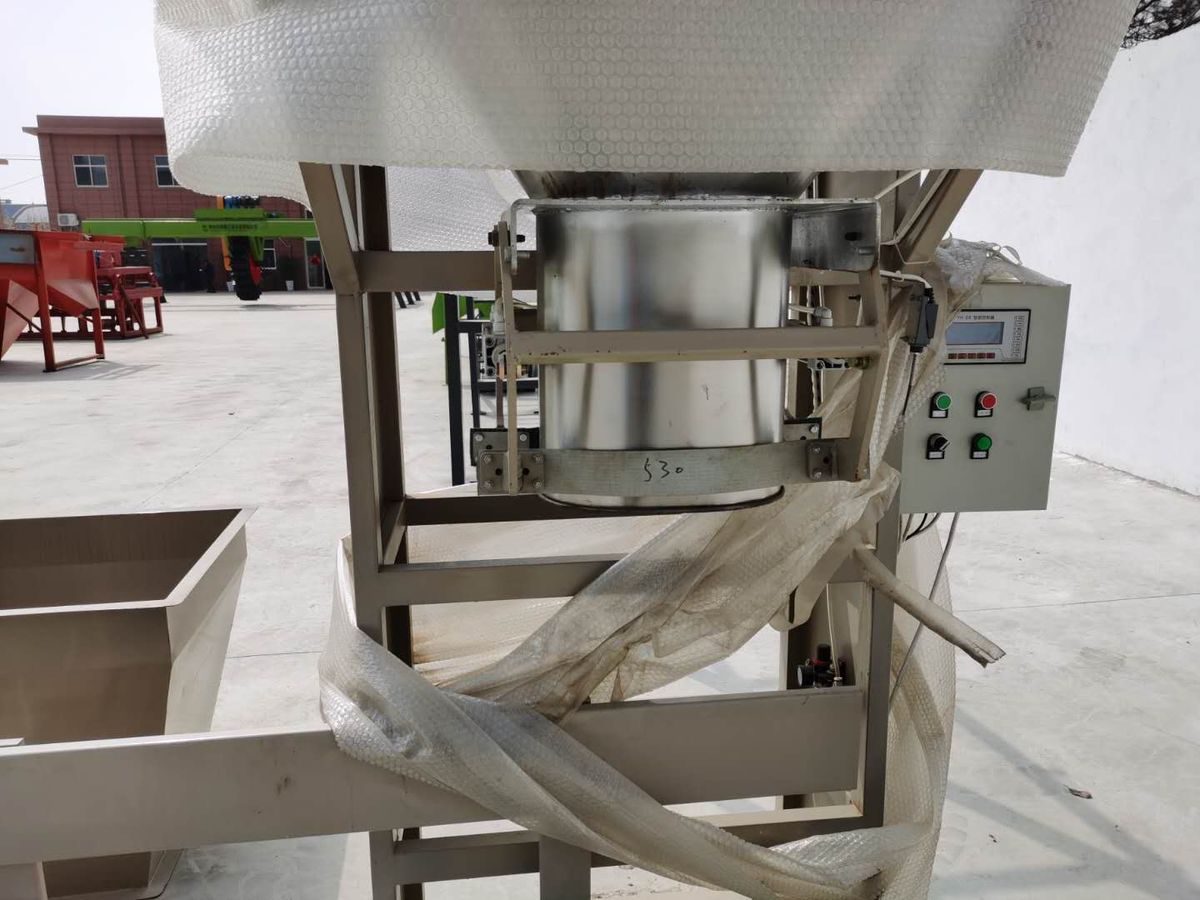
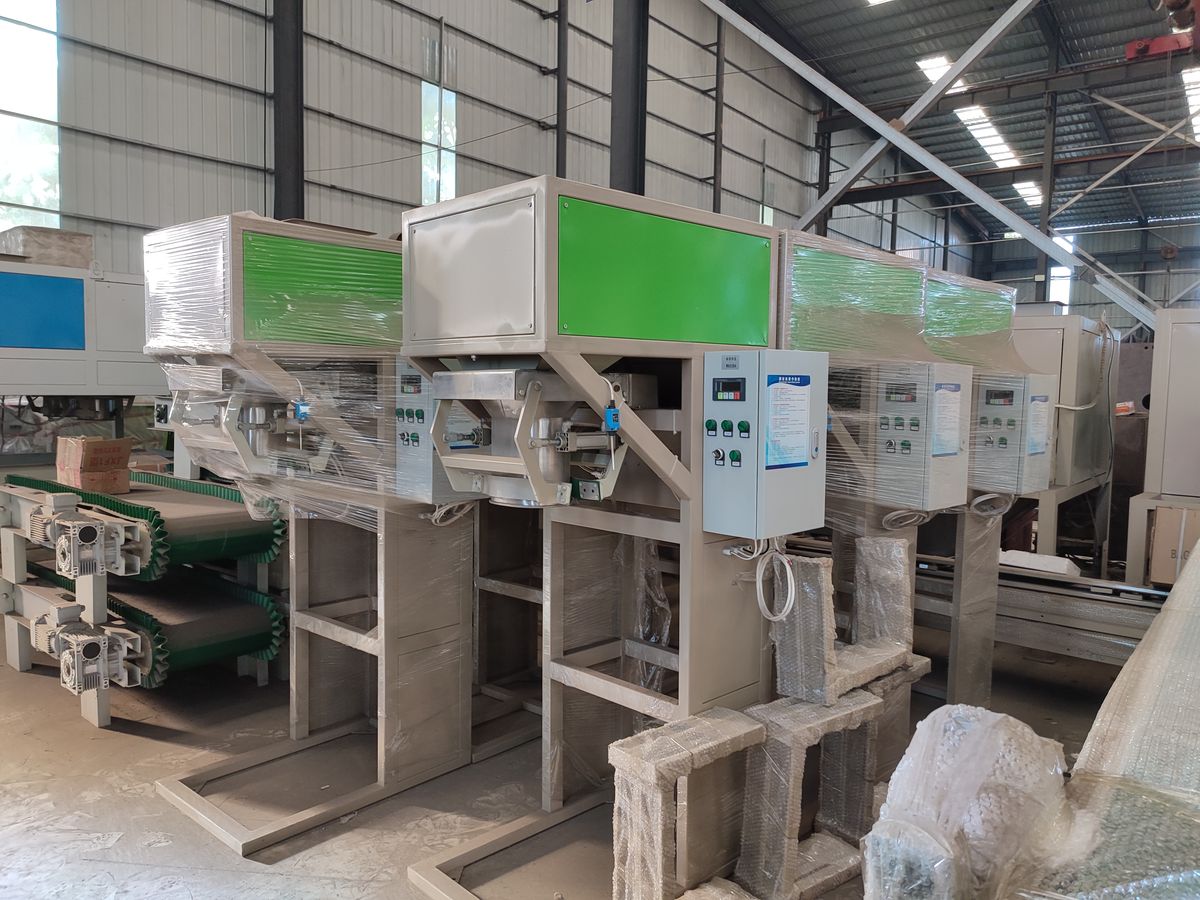
Manure bagging machine is an important equipment in commercial products production. It is available in complete manure drying system, compost fertilizer production line and granular animal manure fertilizer production line. Shunxin manure bagging machine belongs to high-precision, automatic and quantitative packaging machine. In addition, it can pack both powdery materials and granular materials.
Picture of Bagging Machine Brief Introduction
It is suitable for packaging powdery product made from animal manure. As we all know, you can deal with animal manure by drying and composting. Both dried manure and composted animal manure are powdery. That is to say, if you want to commercial manure products, you can adopt it. In manure drying system, the packing process occurs after drying process. And in compost fertilizer production, you can make bagged compost fertilizer after screening process. In addition, its special design for powdery fertilizer can effectively prevent caking during material feeding.
It usually appears in organic fertilizer production process. There is single-bucket and double-bucket bagging equipment for you to choose. In terms of single-bucket bagging equipment, it just can be set with one packing scale (25 kg/50 kg). Conversely, double-bucket bagging equipment can produce bagged fertilizer with two different weights at the same time. Its advantage is easy operation, compact structure, energy saving and high accuracy.
Shunxin industrial bagging machine is also called ton-bag packing machine. That is to say, it is suitable for packaging large scale materials at one time. Its inner part adopts quality material, which is anti-corrosion and anti-adhesion. Therefore, it is widely used in multiple industries.
If you are interested in this machine? You can contact us for more details!
The most common application of Shunxin bagging machine is manure to fertilizer production. It is available in horse manure fertilizer production, fertilizer production from chicken manure, commercial livestock manure fertilizer production and so on. Besides, you can also use in cereal packaging (such as soybean, corn, rice, millet, wheat and so on), other fertilizer production (compound fertilizer, BB fertilizer, chemical fertilizer and so on), powdery materials bagging (flour, fly ash and others).
Photographed in our Xingyang workshop and on customer sites. Watermark-free, no phone numbers.


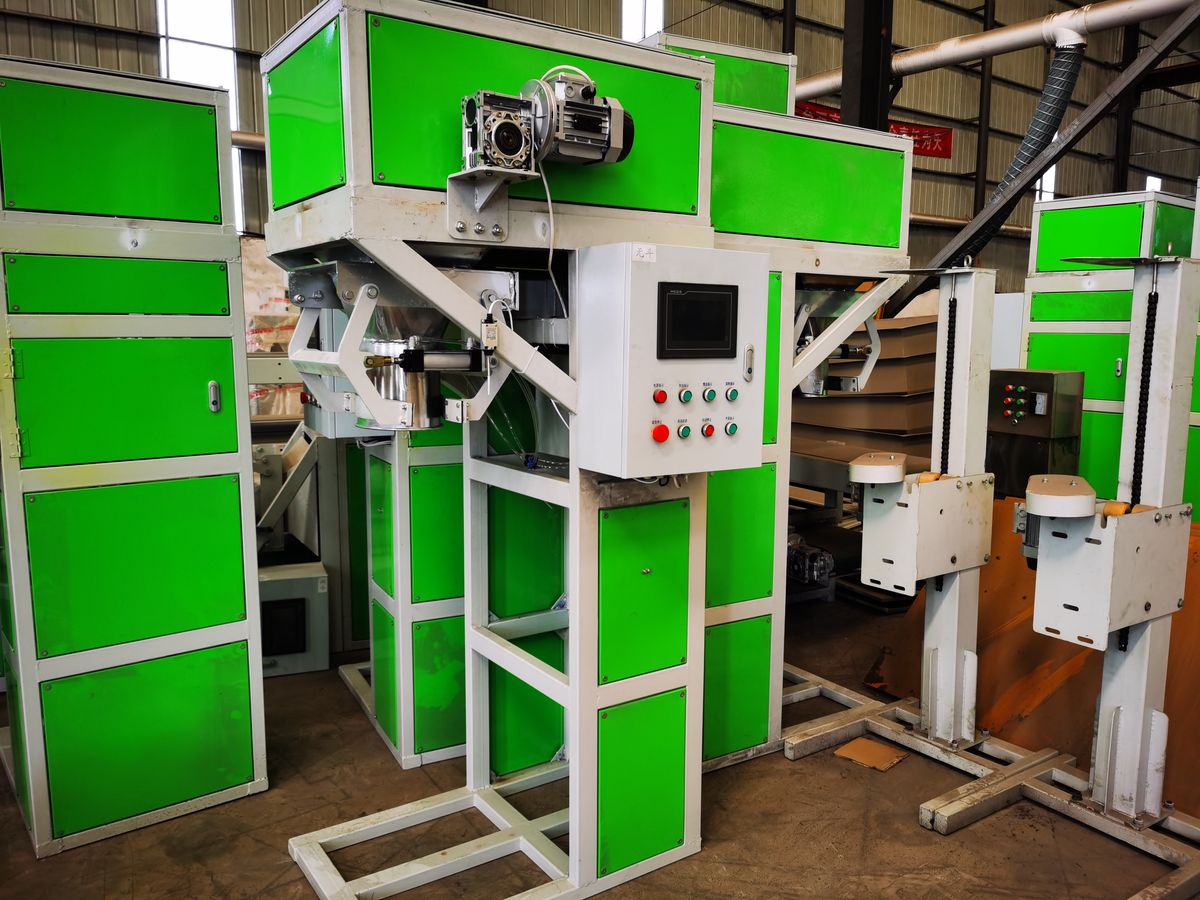
The standard agricultural sizes are 25 kg, 40 kg and 50 kg, and these cover most organic fertilizer markets. Larger installations also fill 500 kg and 1,000 kg jumbo bags for bulk buyers, and small packaging of 5–10 kg is used for retail horticultural products. The bag format is fixed at the order stage because it determines the filling spout and the conveyor.
Bag sewing is cheaper, works with woven polypropylene and paper sacks alike, and is easy to maintain anywhere in the world. Heat sealing gives a cleaner, more moisture-resistant closure but requires a consistent bag material and a more careful machine setting. For most organic fertilizer products, especially powders in humid climates, we recommend a sewn closure with a polyethylene liner where moisture protection matters.
Our packing scales are typically specified at ±0.2% to ±0.5% per bag depending on the model and the flow characteristics of the product. Powder is harder to weigh accurately than pellets because of its variable bulk density, so a powder line usually uses a two-stage fast-and-trickle fill to reach the tighter figure.
Only if you are producing enough bags to make manual palletising a bottleneck, or if your customers require precisely stacked, uniform pallets for export. Below about 500 bags a day, manual stacking on a simple pallet stand is adequate. Above that, a palletiser removes two or three people per shift from the task.
Manure fertilizer machines that turn compost into a product: granulators, pellet machines, powder lines, coaters, cool…
Read more →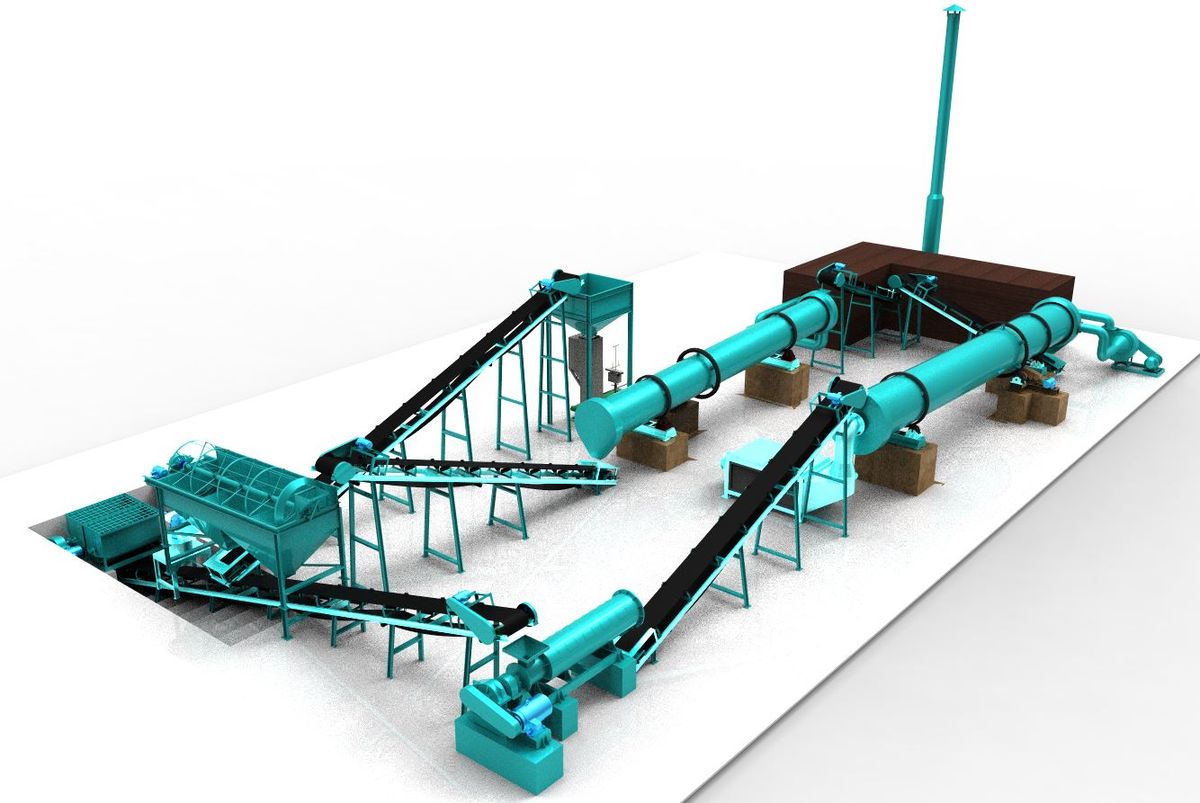
Complete manure fertilizer production lines from 1 to 30 t/h: separation, fermentation, batching, granulation, drying,…
Read more →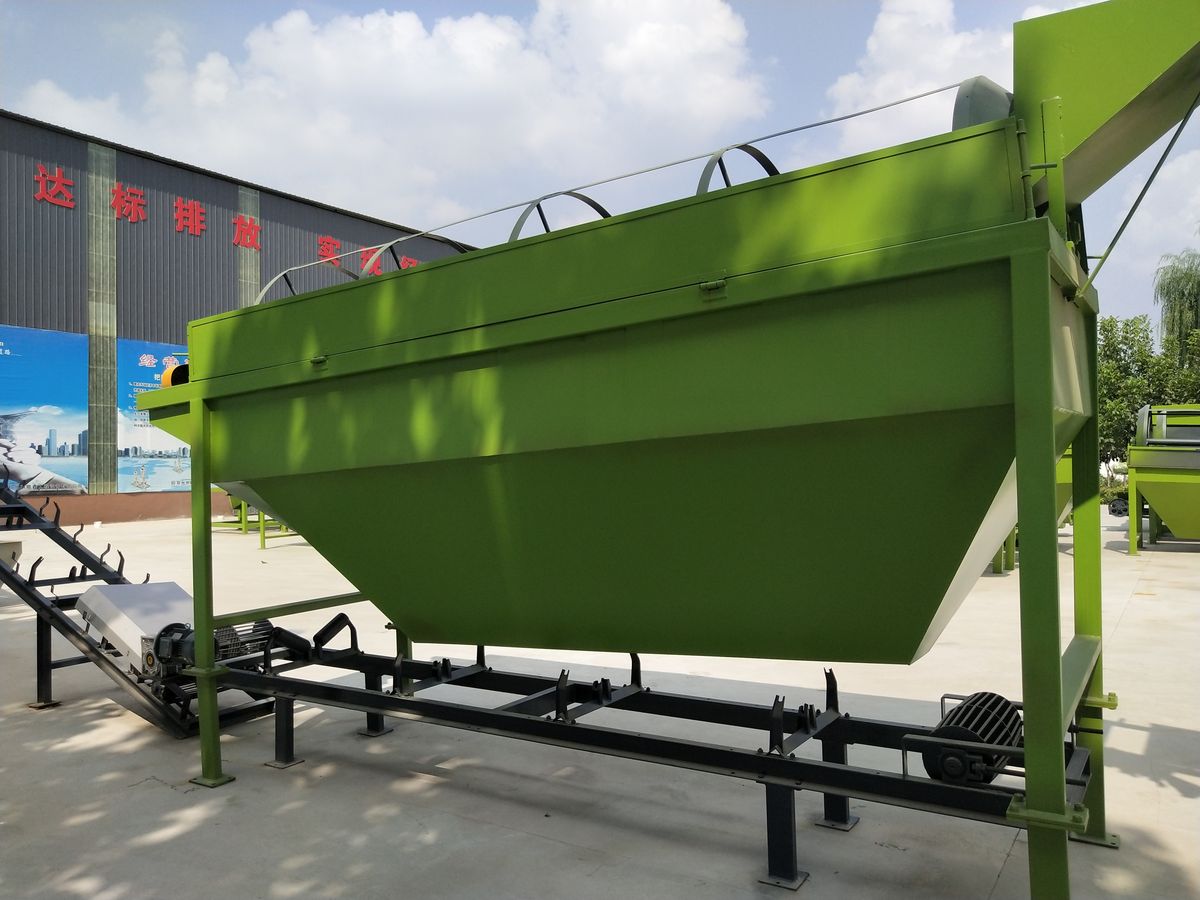
Compost screening equipment that grades manure compost into powder fertilizer and separates oversize, stones and plast…
Read more →
Answers on the auxiliary machines that finish a fertilizer line: polishing machines for rounder pellets, coating machi…
Read more →Send your raw material, target capacity and country. Our engineers reply within one working day with a process route, equipment list and budget.
Send us your raw material and target capacity — we will propose the process, the machines and the budget.
Send your raw material and target capacity — our engineers reply within one working day with a process route, equipment list and budget.
Our engineering team will reply within one working day. For anything urgent, message us on WhatsApp.
Open WhatsApp