
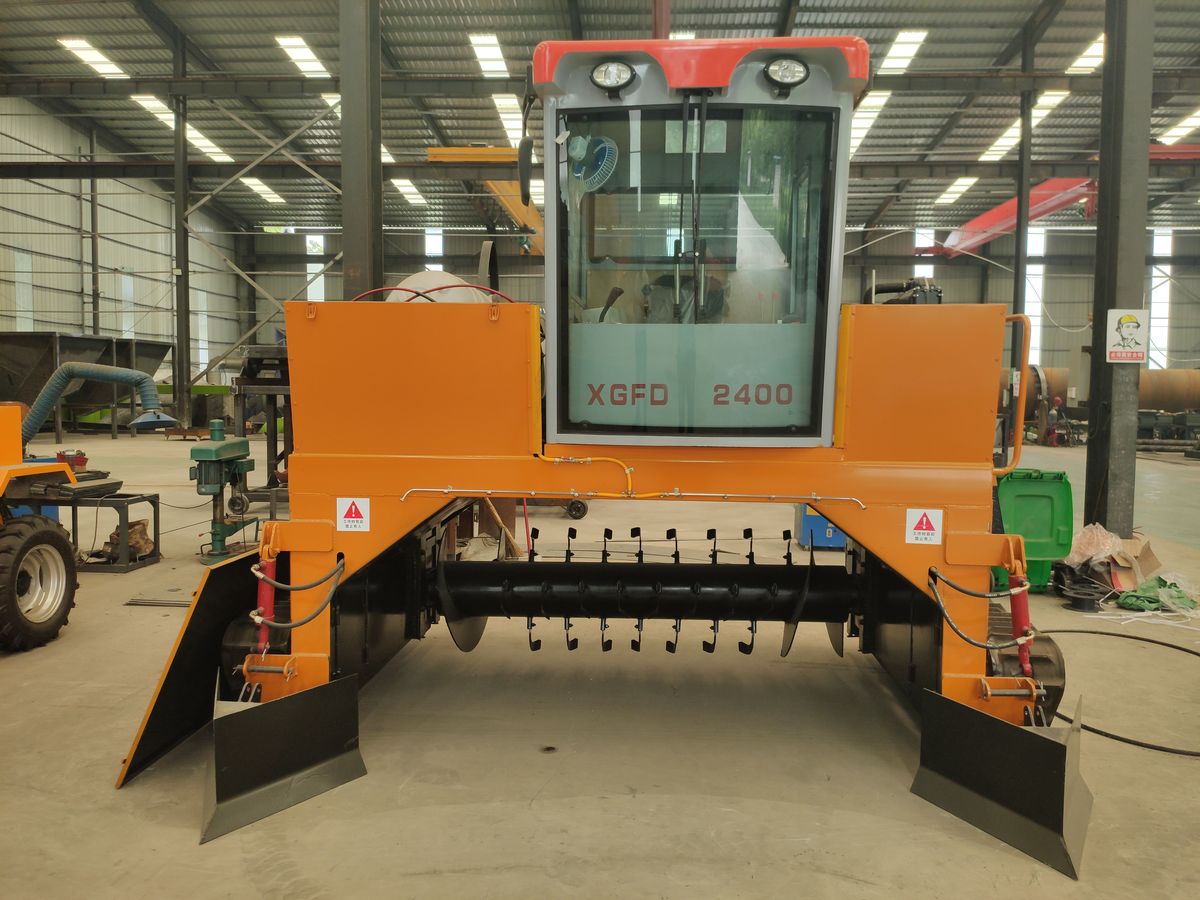
Compost Windrow Turner
Compost windrow turners for manure: self-propelled and crawler types that aerate and remix the pile, cut fermentation …
Read more →The practical details of choosing and running a compost turner: speeds, drive types, fuel, lubrication, optional cabins and water spray systems.
Yes, a cab can be added to the self-propelled machine as an option. It is not fitted as standard, because the machine is normally used on small and medium farms where the operator works short shifts and the cost matters. On crawler turners the enclosed cab is standard, because those machines are designed for continuous commercial operation and the cab isolates the operator from the heat and odour of the composting process.
Water is added during turning to correct moisture, and the machine can be fitted with a spray bar fed from an on-board tank. Adding water during turning is the easiest moment to do it, because the material is already being mixed and the water is distributed evenly rather than creating wet pockets. On machines without a tank, moisture is corrected with a hose before or after turning.
Diesel. Crawler turners typically run engines of 75–143 hp depending on the working width, and self-propelled machines use smaller diesel engines. Consumption is a function of the volume turned rather than of hours run, so it is more useful to calculate fuel per cubic metre of compost than per hour.
The rotor bearings are the critical items and should be greased daily in continuous operation, along with the drive shaft bearings and the chassis pivot points. Hydraulic oil and filters are changed on the intervals in the machine manual, typically 500–1,000 hours. In dusty composting conditions, air filters need more frequent attention than the manual suggests.
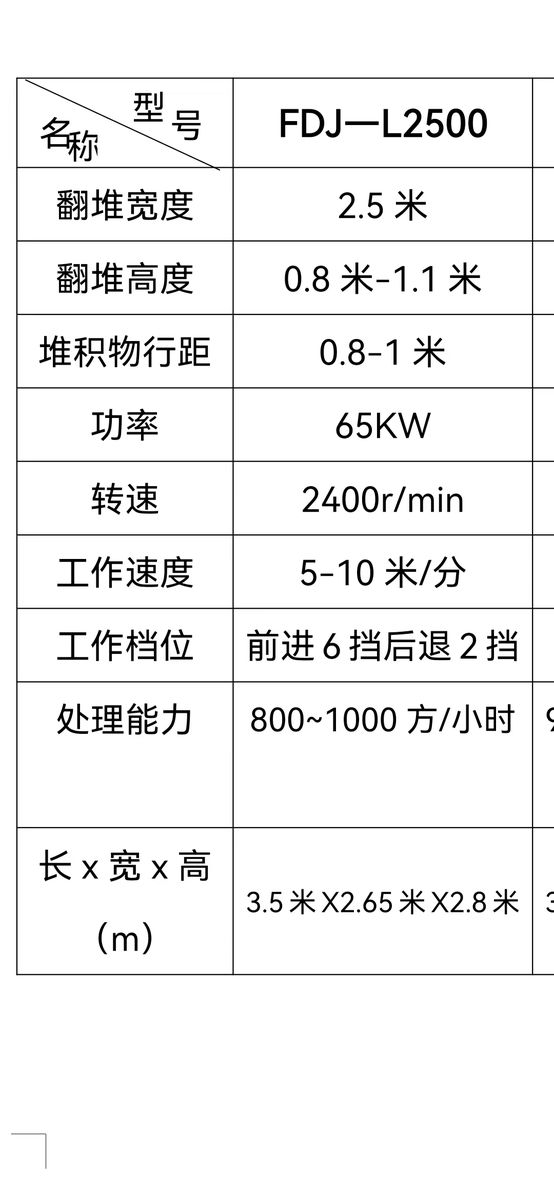
No. The self-propelled (moving type) turner runs its rotor at about 2,200 r/min and the crawler type at about 2,400 r/min. Both have a working travel speed of 6–10 m/min. The crawler machine's slightly higher rotor speed, combined with its greater weight and hydraulic drive, is what gives it the higher throughput.
Yes — its maximum rotor speed is 2,200–2,400 r/min and the working travel speed is 6–10 m/min, both of which can be varied by the operator. Adjusting the speed matters when the material changes: a faster rotor and slower travel break up caking more thoroughly, while a slower rotor and faster travel move a large volume quickly.
Yes, including the pipework, nozzles and pump. A spray system is worth specifying even in a wet climate, because fermentation evaporates more water than most operators expect — particularly in the third week, which is when piles most often dry out and stall.
Choose the self-propelled machine for small and medium farms, sites with several separate piles, and wherever the pile geometry changes frequently: it is cheaper, more manoeuvrable and simpler to maintain. Choose the crawler machine for continuous commercial composting, soft or uneven ground, and volumes above roughly 900 m³/h, where the hydraulic drive, rubber tracks and enclosed cab justify the additional cost.
Photographed in our Xingyang workshop and on customer sites. Watermark-free, no phone numbers.
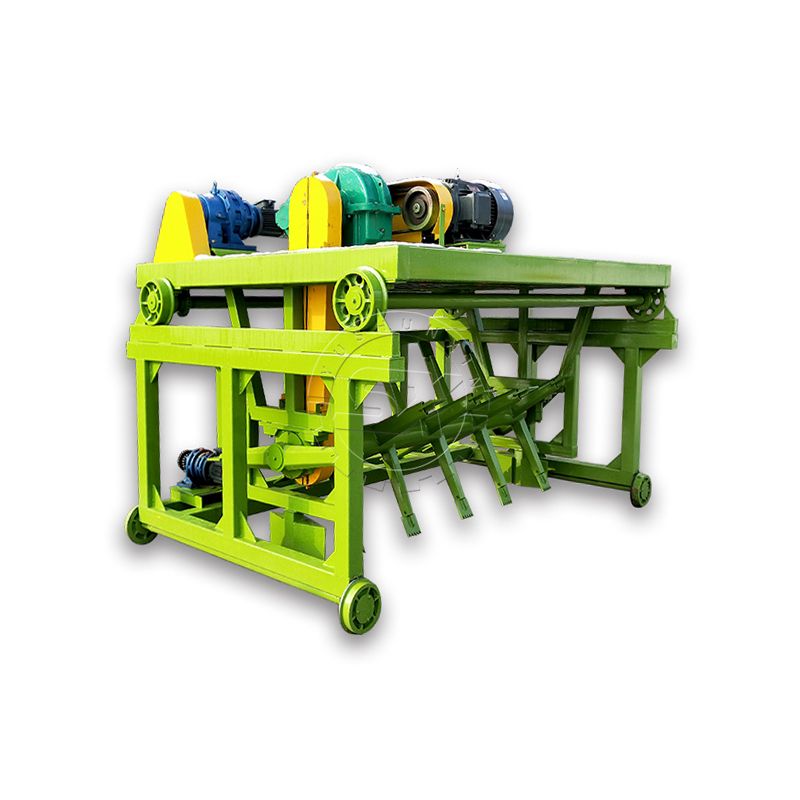
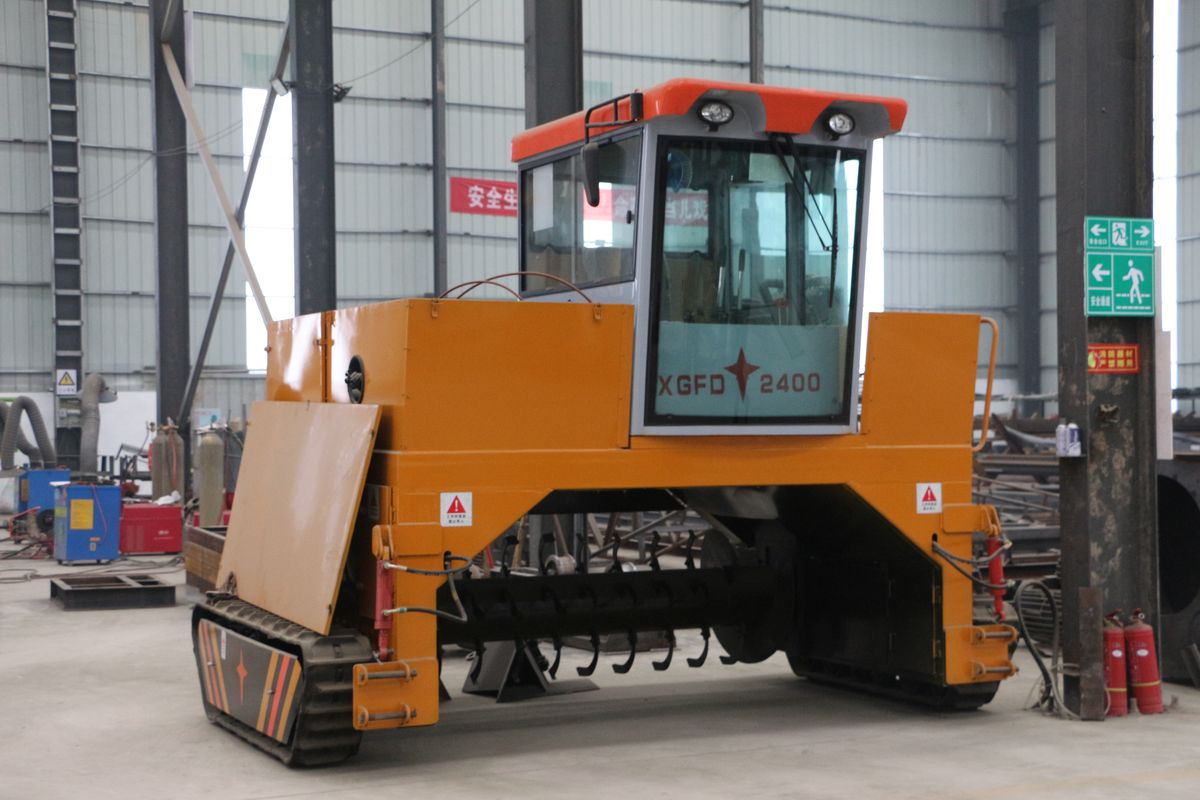
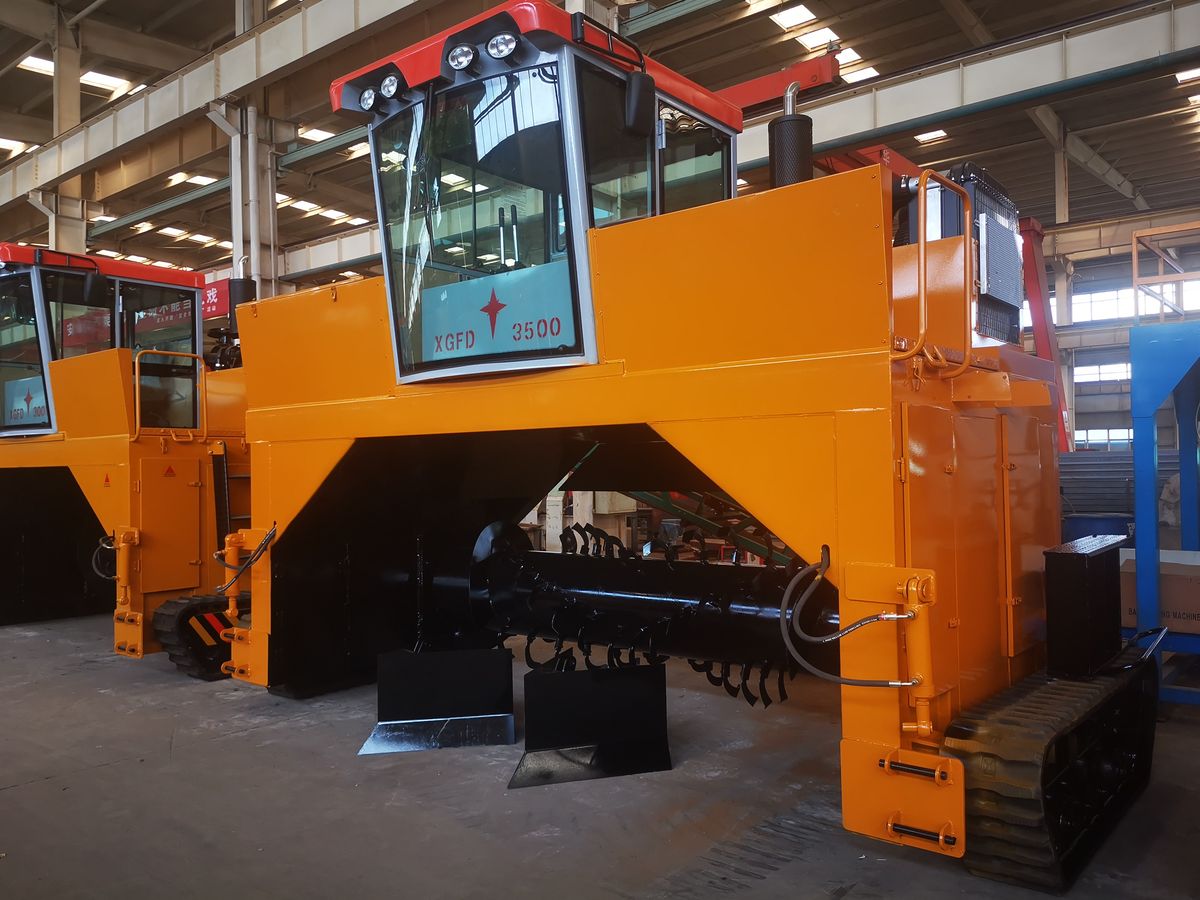
Compost windrow turners for manure: self-propelled and crawler types that aerate and remix the pile, cut fermentation …
Read more →Manure composting systems: windrow, groove and in-vessel fermentation, how to design the pile, control temperature, ju…
Read more →
Answers to the questions we are asked most about manure processing: composting methods, equipment selection, plant are…
Read more →
Poultry composting machines for layer and broiler farms: fermentation tanks, groove turners and forklift turners that …
Read more →Send your raw material, target capacity and country. Our engineers reply within one working day with a process route, equipment list and budget.
Send us your raw material and target capacity — we will propose the process, the machines and the budget.
Send your raw material and target capacity — our engineers reply within one working day with a process route, equipment list and budget.
Our engineering team will reply within one working day. For anything urgent, message us on WhatsApp.
Open WhatsApp